The Real Benefits of eCommerce SEO (With Data)
eCommerce SEO delivers compounding returns that paid ads cannot match. Here are the core benefits, how to calculate ROI, and why Philippine online stores should prioritize it in 2026.
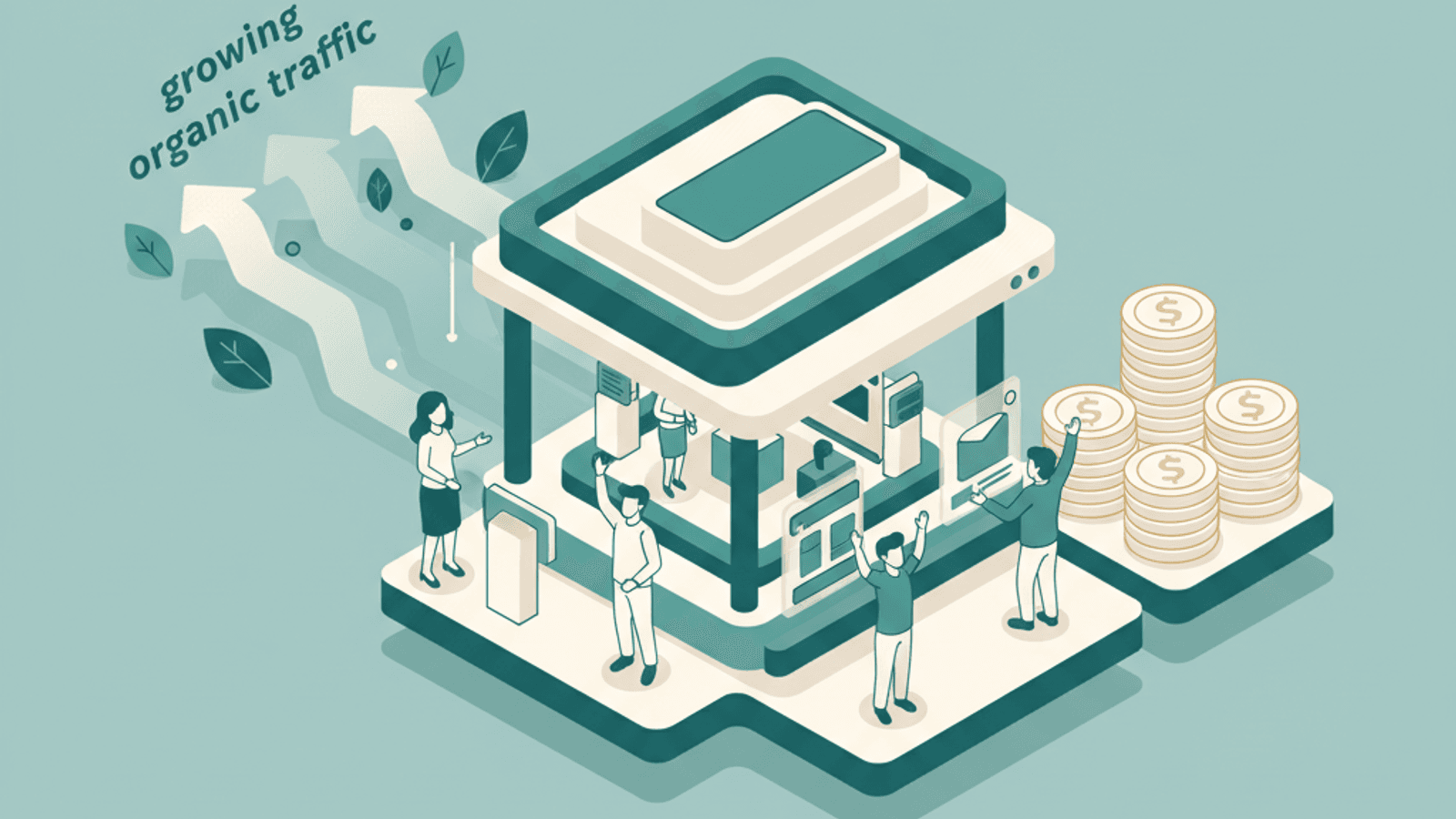
Every peso you spend on paid advertising generates traffic precisely as long as you keep spending. The moment the budget runs out, the traffic stops. eCommerce SEO works differently. The organic traffic built through well-executed SEO continues to arrive — and typically grows — without ongoing media spend.
That fundamental difference explains why eCommerce SEO has one of the highest long-term ROI profiles of any digital marketing channel. But the case for SEO goes beyond the cost argument. This piece covers the full range of benefits, how to calculate what SEO is actually worth to your store, and why the 2026 search landscape has made organic visibility more valuable than ever.
Benefit 1: Sustainable Traffic That Compounds Over Time
Paid search traffic has a simple relationship to cost: double the budget, roughly double the traffic. Stop paying, and the traffic stops within hours. Organic search works on a different curve entirely.
A product page that reaches position 2 for a high-intent keyword does not require ongoing investment to maintain that traffic. The rankings were earned through a combination of technical optimization, content quality, and authority — and once earned, they provide returns indefinitely unless a competitor actively out-invests you.
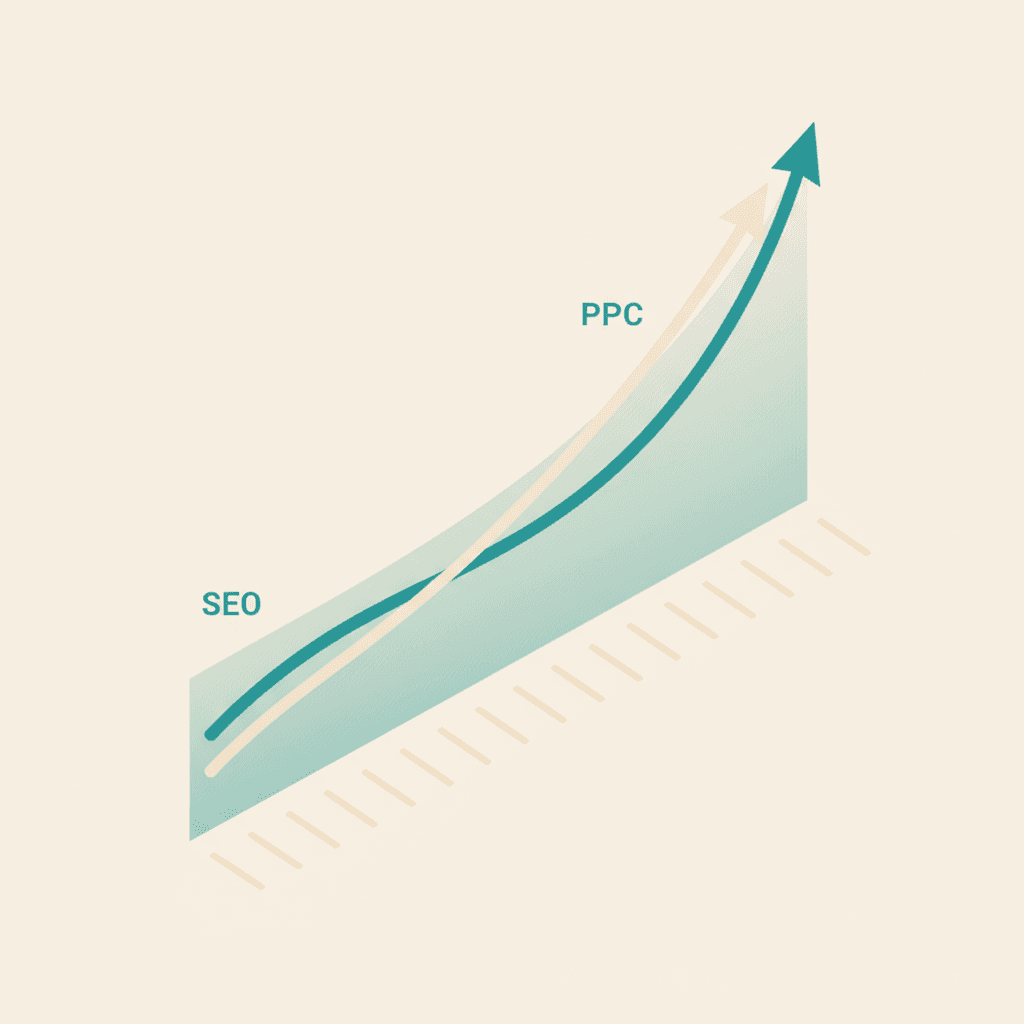
More importantly, SEO results compound. Each piece of content you publish adds to your topical authority. Each backlink you earn improves your domain's overall standing. Each technical fix creates a marginally better base for future work. Over a 12-to-24-month horizon, the organic traffic curve bends upward in a way that paid traffic cannot replicate without proportional spend increases.
For Philippine eCommerce stores competing in a market where advertising costs on Meta and Google Ads are rising year-over-year, this compounding dynamic is a significant competitive advantage.
Benefit 2: Lower Customer Acquisition Cost
Customer acquisition cost (CAC) is the total cost required to acquire one paying customer. For paid search, CAC is directly tied to your cost-per-click and conversion rate. For organic search, once rankings are established, CAC drops dramatically because the marginal cost of each additional visitor approaches zero.
A rough calculation:
- Agency retainer: ₱60,000/month
- Organic sessions driven: 15,000/month
- Organic conversion rate: 2.5%
- Organic revenue customers: 375/month
- SEO CAC: ₱160 per customer
Compare to a Google Ads campaign at ₱35 CPC with a 3% conversion rate:
- Spend ₱60,000 → 1,714 clicks → 51 customers
- Paid CAC: ₱1,176 per customer
These are illustrative numbers, but the directional gap is consistent with what well-run eCommerce SEO programs deliver after the initial build period. The SEO investment is front-loaded; the returns distribute over months and years.
Benefit 3: High-Intent Traffic at Every Stage of the Buyer Journey
Organic search captures buyers across the entire purchase cycle — not just the moment they are ready to click "add to cart."
- Awareness: "best wireless earbuds for commuting" → buyer discovers your buying guide
- Consideration: "Sony vs. Jabra earbuds comparison" → buyer evaluates your product pages
- Decision: "buy Sony WF-1000XM5 Philippines free shipping" → buyer converts
Paid ads are most efficient at the decision stage — targeting high-intent transactional keywords. But organic search can cost-effectively own the entire funnel. A buyer who finds your buying guide at the awareness stage, reads your comparison content, and then purchases is more likely to trust your brand, return for repeat purchases, and refer friends — all metrics that compound the lifetime value of SEO-driven customers.
The benefits of SEO in general extend this framework to non-eCommerce contexts, but the funnel logic applies with particular force to online retail.
Benefit 4: Brand Visibility Without Ongoing Ad Spend
When your store appears consistently at the top of search results for relevant queries, you build brand recognition even among searchers who do not click. Estimated that only 30-40% of search results users click on the top organic result — but the millions who see the listing register your brand name, product category association, and positioning.
This passive brand building is effectively free. It complements paid advertising (when you run it) by increasing the likelihood that searchers who see your ad recognize the brand and are more likely to trust the click. Studies consistently show that brands appearing in both organic and paid results achieve higher combined click-through rates than either channel in isolation.
Benefit 5: Visibility in AI-Powered Product Discovery
The 2026 search landscape looks meaningfully different from 2023. Google's AI Overviews now generate product recommendations and buying guidance for a significant share of commercial queries. These AI-generated summaries pull from structured, machine-readable product data, authoritative content, and strong E-E-A-T signals.
Stores that have invested in complete product schema, optimized product copy, and a content authority base are the ones appearing in AI Overview recommendations. Stores that have not done this work are invisible to a growing share of buyer searches.
Voice commerce — shopping through smart speaker queries and mobile assistant commands — follows the same logic. The products and stores recommended in voice responses are drawn from the same quality signals that determine AI Overview inclusion. Building for this channel is not a future consideration; the searchers using it represent real revenue today.
Benefit 6: Reduced Dependence on Third-Party Marketplaces
Philippine eCommerce brands selling through Shopee and Lazada face an uncomfortable reality: the platforms own the customer relationship. You cannot email your buyers. You cannot retarget them. You pay a commission on every sale. And your visibility within the marketplace is subject to algorithm changes, advertising auctions, and policy shifts outside your control.
Organic search traffic to your own domain inverts this dynamic. You own the customer data. You pay no transaction fee to Google for organic clicks. You control the brand experience from first impression to post-purchase. And the asset you build — domain authority, content, technical infrastructure — is yours permanently.
This is why leading Philippine DTC (direct-to-consumer) brands are investing in eCommerce SEO alongside marketplace presence: to build an owned acquisition channel that does not depend on platform terms.
Benefit 7: Competitive Intelligence and Market Positioning
A byproduct of rigorous keyword research is continuous market intelligence. Understanding what your target customers are searching for — and at what volume — tells you:
- What products have growing or declining demand
- What price points buyers are searching around ("under 3000," "best budget")
- What concerns and objections come up repeatedly in search queries
- Where competitor weaknesses exist (keywords they rank poorly for where you could rank better)
This intelligence informs not just your SEO strategy but your product development, pricing, and merchandising decisions. Stores that use their keyword data as a market research tool make better business decisions across the board.
eCommerce SEO vs. PPC: A Side-by-Side Comparison
Organic search and paid search are not competitors — they are complementary channels. But understanding the trade-offs helps you allocate investment intelligently.
Factor — eCommerce SEO — PPC
Time to traffic — 3-6 months minimum — Hours to days
Cost structure — Front-loaded investment, low marginal cost — Ongoing per-click spend
Traffic sustainability — Continues without ongoing spend — Stops when budget stops
ROI timeline — Long-term, compounding — Immediate but non-compounding
Targeting precision — Keyword-level, algorithmic — Keyword + audience + device + time
Brand building — High (consistent SERP presence) — Moderate
Click-through rate — Higher for most organic positions vs. ads — Lower, but controllable
Control — Lower (algorithm-dependent) — High
The optimal strategy uses PPC for immediate revenue and new product launches, while SEO builds the sustainable long-term channel that reduces the total advertising budget required over time. Stores that have built strong organic positions can run paid campaigns with a lower baseline spend, using ads only for competitive defense and new customer acquisition rather than all-day baseline traffic.
How to Calculate the ROI of eCommerce SEO
The ROI calculation for eCommerce SEO requires connecting your organic traffic to revenue, then comparing that revenue to the total cost of producing it.
Step 1: Establish your organic baseline
In Google Analytics, filter sessions by organic search channel. Record monthly organic sessions, conversion rate, average order value, and resulting organic revenue.
Step 2: Calculate organic revenue contribution
Monthly organic revenue = organic sessions × conversion rate × average order value
Step 3: Calculate total SEO investment
Include: agency retainer or internal team cost, tool subscriptions, and content production costs.
Step 4: Calculate ROI
SEO ROI = (Organic Revenue − SEO Investment) / SEO Investment × 100
For a typical engaged eCommerce SEO program after 12 months, 3:1 to 8:1 ROI ratios are achievable. The range is wide because it depends heavily on competitive landscape, catalog depth, existing domain authority, and execution quality.
The key insight is that ROI improves over time as rankings compound and the cost base stays relatively fixed. Month 3 ROI might be negative. Month 18 ROI could be 10:1 or higher on the original investment.
The Benefits of eCommerce SEO for Philippine Online Stores
Philippine eCommerce has specific characteristics that amplify several of these benefits:
High mobile search volume: Over three-quarters of Philippine online shopping research happens on mobile. Well-optimized stores that rank well on mobile capture this traffic efficiently. Stores optimized only for desktop miss a majority of their potential audience.
Growing but still under-optimized competitive landscape: Many Philippine eCommerce brands are just beginning to invest in organic search after years of marketplace dependency. The brands that invest now will establish category positions that are expensive for later entrants to displace.
COD and local trust signals: Filipino buyers have specific trust requirements — cash on delivery, GCash payment, local warehouse dispatch, responsive customer service. Stores that incorporate these signals into their content and structured data build both buyer trust and search relevance simultaneously.
Lower competition on high-intent local queries: "Buy [product] Philippines with COD" type queries are substantially less competitive than their equivalent global terms. These are winnable positions for well-optimized local stores within realistic timeframes.
Taking the Next Step
Understanding the benefits of eCommerce SEO is the first step. Capturing them requires a coherent strategy, executed consistently over time. The eCommerce SEO tips guide covers the specific optimization activities that drive these benefits for online stores at every stage.
If you are ready to build the organic traffic asset that reduces your dependence on paid advertising and marketplace fees, professional SEO services team works exclusively with brands serious about long-term growth.
Unlike pay-per-click advertising where traffic stops when spending stops, SEO compounds over time.
Frequently Asked Questions
What is the biggest benefit of eCommerce SEO over paid ads?+
The compounding nature of organic traffic. Once rankings are earned, they continue to deliver traffic without ongoing spend. Paid ads deliver traffic precisely as long as you are spending. Over a 12-24 month horizon, the cost-per-acquisition from organic search drops significantly below paid channels for most eCommerce categories.
How quickly do you see the benefits of eCommerce SEO?+
Early technical improvements can produce quick wins within 30-60 days (better indexation, structured data improvements, crawl fixes). Meaningful traffic growth typically becomes visible at three to six months. The compounding benefits — lower CAC, significant organic revenue contribution, category authority — build over 12-24 months.
What is the ROI of eCommerce SEO?+
ROI varies widely by competitive landscape, execution quality, and store maturity. Well-run programs after 12 months commonly achieve 3:1 to 8:1 ROI. The ratio improves over time as the organic traffic base grows while the investment cost base stays relatively fixed.
Are the benefits of eCommerce SEO different for Philippine stores?+
Yes — positively so. The Philippine eCommerce search landscape is less saturated than equivalent Western markets, local-intent keywords carry significant conversion value, and many competitors are still underinvesting in organic search. Philippine stores entering organic search now have a genuine opportunity to establish dominant positions in their categories.
Can small eCommerce stores benefit from SEO?+
Absolutely. Small stores actually have an advantage in eCommerce SEO: they can focus their entire effort on a narrow product niche and build topical authority faster than large generalist retailers. Long-tail keywords that are not worth a large retailer's optimization effort are often highly achievable for a focused small store — and they carry the highest purchase intent.