Digital Marketing Services Explained: What You Get
A plain-English breakdown of every major digital marketing service — what each one includes, how they work together, and which ones your business actually needs.
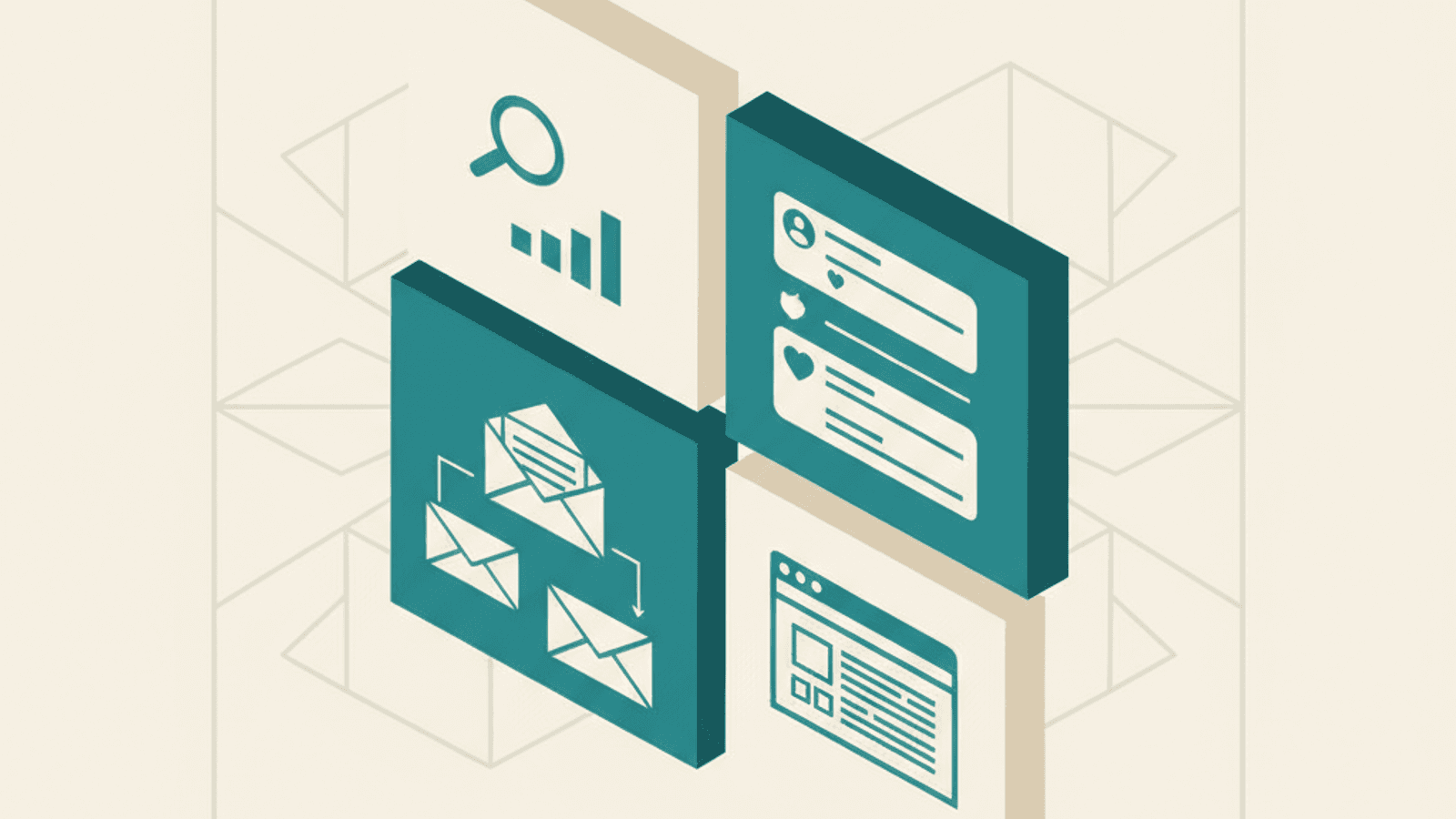
Digital marketing is a broad term that covers a wide range of disciplines, platforms, and activities. For businesses evaluating their options — or hiring an agency for the first time — the terminology can be confusing. What exactly is included in an "SEO package"? What does a social media manager actually do? How does PPC work, and what do you get for the management fee?
This guide answers those questions directly. Each major service category is broken down by what's included, how it generates value, and how it connects to other channels. The goal is to give business owners and marketing decision-makers a clear map of what's available, so spending decisions are informed by understanding rather than assumption.
Understanding the Digital Marketing Stack
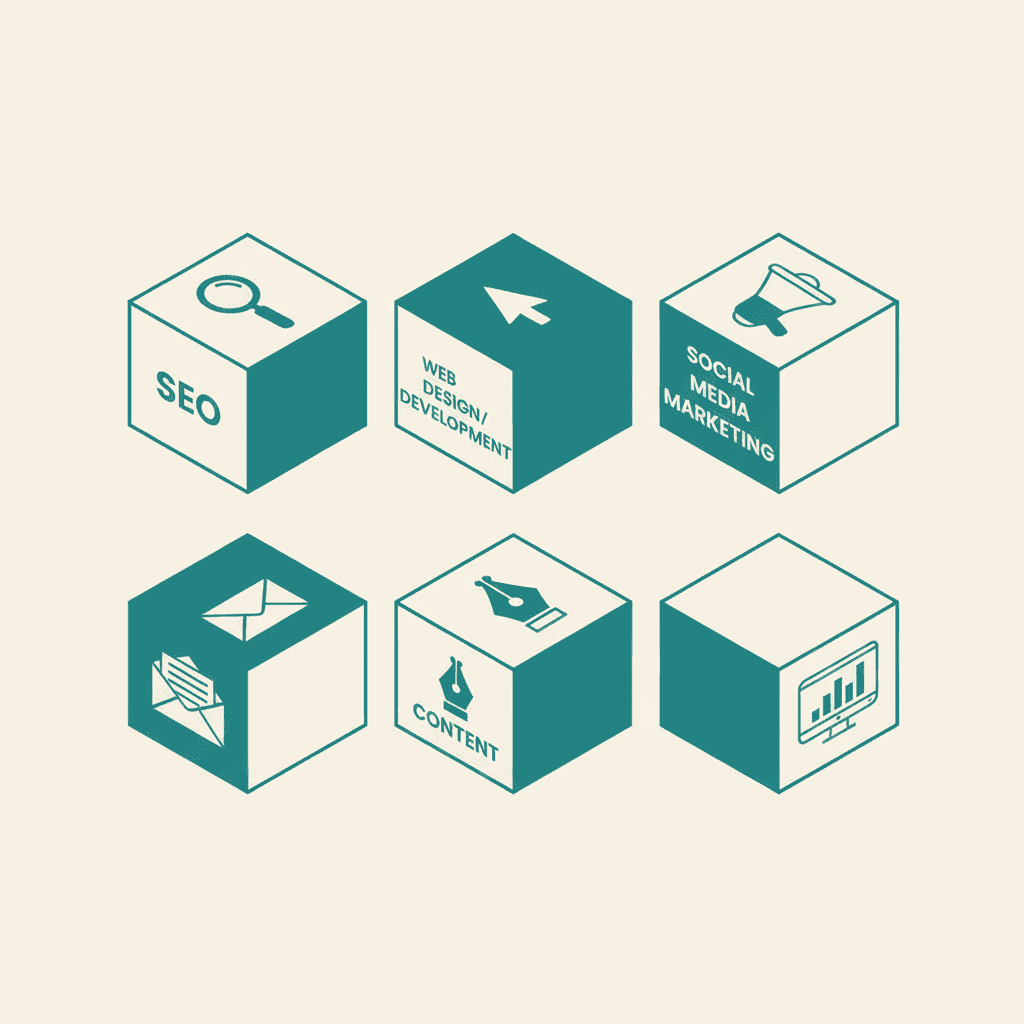
Before the service-by-service breakdown, it helps to understand how these disciplines relate to each other. Digital marketing is not a set of interchangeable options — it's a system where channels reinforce each other when coordinated effectively.
The digital marketing landscape in the Philippines rewards businesses that treat these channels as interconnected rather than siloed. A blog article optimized for search generates organic traffic, gets shared on social media, earns backlinks that improve domain authority, and gets distributed to an email list — a single piece of content doing work across four channels simultaneously.
Understanding what SEO is and how it fits into the broader stack is a useful starting point, because search is the highest-intent channel and often the anchor around which other services are built.
Search Engine Optimization (SEO)
SEO is the discipline of earning organic (unpaid) visibility in search engine results. In practice, it involves making a website easier for search engines to understand, more trustworthy in Google's eyes, and more relevant to the queries target customers are using.
What SEO includes:
Technical SEO: Auditing and fixing the structural elements of a website that affect how search engines crawl and index it. This includes site speed, mobile responsiveness, URL structure, internal linking, XML sitemaps, canonical tags, and structured data markup.
On-page SEO: Optimizing the content and metadata of individual pages — title tags, meta descriptions, heading hierarchy, keyword placement, content depth, and internal links. Each page is optimized to rank for a specific set of queries.
Content creation: Producing articles, guides, service pages, and landing pages that target keywords with commercial and informational intent. Content is the fuel that powers organic rankings.
Link building: Earning backlinks from other reputable websites. Google treats backlinks as votes of confidence — pages with more high-quality links from relevant domains rank better than those without them.
Local SEO: For businesses with a physical location or geographic service area, local SEO focuses on Google Business Profile optimization, local citation building, and appearing in the Google Maps pack for location-based queries.
Reporting: Monthly reporting on keyword rankings, organic traffic, and conversion data from organic search.
What SEO does not include:
Paid placements. Any traffic driven by SEO is organic — earned, not purchased.
Timeline:
SEO is a long-game investment. Most businesses see meaningful ranking movement at three to six months, with competitive rankings and strong traffic growth emerging at twelve to eighteen months.
Pay-Per-Click Advertising (PPC)
PPC management covers the setup, management, and optimization of paid advertising campaigns. The most common platforms in the Philippine market are Google Ads and Meta Ads (Facebook and Instagram).
What PPC includes:
Campaign strategy: Defining campaign types (search, display, shopping, video), audience targeting parameters, geographic targeting, and budget allocation across campaigns.
Ad creation: Writing ad copy for search ads, designing display banners or video scripts for visual campaigns, and creating landing pages or coordinating with web teams to improve conversion rates.
Keyword research and targeting: For search campaigns, identifying the keywords that trigger ads, setting match types, building negative keyword lists to exclude irrelevant traffic.
Audience building: For display and social campaigns, defining custom audiences based on demographics, interests, behaviors, or remarketing lists of website visitors.
Bid management: Optimizing bids by keyword, audience segment, device, time of day, and location to maximize return on ad spend within the allocated budget.
A/B testing: Running controlled experiments on ad copy, landing pages, and audience segments to systematically improve performance.
Reporting: Regular reporting on impressions, clicks, cost per click, cost per conversion, and ROAS (return on ad spend).
What PPC includes (financially):
The management fee covers the agency's work. Media spend — the actual money Google or Meta charges for clicks and impressions — is a separate budget line.
Timeline:
PPC can generate traffic on day one. However, campaigns typically require four to eight weeks of a "learning phase" during which the algorithm collects data and performance improves. Mature, well-optimized campaigns generally outperform new ones significantly.
Social Media Marketing
Social media management covers brand presence, content publishing, community engagement, and sometimes paid social advertising across platforms like Facebook, Instagram, TikTok, LinkedIn, and YouTube.
What social media management includes:
Content strategy: Defining what types of content will be produced, at what frequency, for which platforms, and aligned to what brand voice and business goals.
Content creation: Writing captions, designing graphics, producing short-form video content, and adapting content formats for each platform's specifications.
Publishing and scheduling: Managing a content calendar and publishing content at optimal times for audience engagement.
Community management: Monitoring comments, replying to messages, engaging with brand mentions, and managing the community dimension of social presence.
Paid social advertising (often scoped separately): Running targeted ad campaigns on Meta or TikTok to amplify content, generate leads, or drive traffic.
Analytics and reporting: Reporting on reach, engagement, follower growth, and — where trackable — leads and conversions from social channels.
What social media does not always include:
Influencer partnerships, brand deals, and paid collaborations are typically scoped and billed separately. Influencer marketing requires its own strategy, vetting, contracting, and measurement process.
Content Marketing
Content marketing is often embedded within SEO or social media retainers, but as a standalone service it covers the research, creation, and distribution of content assets designed to attract, educate, and convert target audiences.
What content marketing includes:
Keyword and topic research: Identifying what questions the target audience is asking, what problems they're trying to solve, and which content gaps the business can fill.
Content briefs: Structured documents that outline the target keyword, article structure, headings, key points to cover, and internal and external linking guidelines.
Article writing: Long-form blog posts, guides, and pillar pages — typically 1,000–3,000 words — that provide genuine depth on a topic.
Downloadable assets: E-books, whitepapers, checklists, and templates that provide value in exchange for email addresses (lead magnets).
Email newsletters: Regular content distributed to a subscriber list, nurturing relationships with people who have already expressed interest.
Case studies and testimonials: Social proof content that demonstrates results for existing customers.
Email Marketing
Email marketing manages communication with an existing list of contacts — leads, customers, and subscribers. It is consistently among the highest-ROI channels for businesses with established audiences.
What email marketing includes:
List management: Organizing subscribers by segment (new leads, existing customers, inactive users), maintaining list health by removing invalid addresses, and managing unsubscribes and compliance (CAN-SPAM, GDPR principles).
Sequence creation: Building automated email sequences that trigger based on user behavior — a welcome series for new subscribers, an onboarding sequence for new customers, a re-engagement series for inactive contacts.
Campaign execution: One-off email campaigns for promotions, product launches, announcements, or content distribution.
A/B testing: Testing subject lines, send times, and email content to improve open rates and click rates.
Analytics: Reporting on open rates, click-through rates, unsubscribes, and revenue attributed to email campaigns.
Web Design and Development
Web design services cover the creation or redesign of websites — from strategy and visual design through development and launch.
What web design includes:
Discovery and strategy: Understanding business goals, target audience, competitive landscape, and functional requirements before design begins.
UX and wireframing: Planning the structure, navigation, and user flow of the site before visual design is applied.
Visual design: Creating the look and feel — typography, color palette, imagery style, and component design — that becomes the site's brand expression online.
Development: Building the site on the chosen platform (WordPress, Webflow, custom Next.js, Shopify, etc.), integrating with payment systems, CRMs, and other tools.
SEO foundations: Implementing technical SEO foundations during development — clean URLs, proper heading structure, fast loading times, schema markup — so the site is ready to rank.
QA and launch: Testing across devices and browsers, fixing bugs, and managing the migration or launch process.
Ongoing maintenance: Post-launch support covering security updates, performance monitoring, content updates, and feature additions.
How These Services Work Together
The most effective digital marketing programs combine services in ways that multiply their individual impact. A few examples:
SEO + Content: Content provides the pages that rank; SEO ensures those pages are technically sound and properly optimized. Neither works as well without the other.
PPC + SEO: PPC data reveals which keywords convert well, informing SEO content priorities. While SEO builds long-term organic authority, PPC provides immediate traffic for high-value terms.
Social + Content: Social media amplifies content to new audiences, earns backlinks from people who share it, and builds brand awareness that makes organic search results more likely to be clicked.
Web Design + All Channels: Every channel ultimately sends traffic to the website. A poorly designed, slow, or confusing site wastes the investment made in driving traffic. Web design is the foundation that all other channels build on.
Understanding the different types of SEO helps frame how technical, on-page, and off-page work fit together within a search strategy — which mirrors how individual digital marketing services fit into a broader program.
Deciding Which Services Your Business Needs
Not every business needs every service from day one. A rational prioritization framework:
Start with the foundation: Website, technical SEO, and local SEO (if applicable). These are table stakes for any digital presence.
Add the highest-intent channel: For most businesses, that's SEO + content or PPC. SEO for long-term compounding; PPC for immediate traffic.
Build community presence: Social media management once the foundation is in place and there is something worth linking people to.
Expand as data accumulates: Email marketing once there's a list to work with; additional channels as ROI from primary channels justifies expanding the program.
The costs of digital marketing in the Philippines vary significantly across service categories, so prioritizing by expected ROI rather than channel coverage is usually the most efficient approach for businesses with limited budgets.
Frequently Asked Questions
Do I need all of these services to succeed at digital marketing?+
No. Most businesses start with one or two channels and expand as results accumulate. The right starting point depends on whether the priority is immediate traffic (PPC), long-term organic growth (SEO + content), or community building (social media).
What is the difference between SEO and content marketing?+
SEO covers the technical and structural optimization of a website, including how pages are built, linked, and presented to search engines. Content marketing focuses on creating the actual articles, guides, and assets that give search engines something to rank and audiences something to read. In practice, they are deeply intertwined — good SEO requires good content, and good content needs SEO to reach its audience.
Does social media management include ad management?+
Not always. Many social media management retainers cover organic content creation and community engagement, with paid social advertising scoped separately. Confirm what's included in any proposal before signing.
How do I know if a website redesign is worth the cost?+
A website that is slow, unresponsive on mobile, or that fails to convert visitors into leads or customers is costing money in lost conversions every day. If analytics show high bounce rates, low time-on-site, or a significant gap between traffic and lead volume, a redesign likely pays for itself in improved conversion rates relatively quickly.
What's the best digital marketing service for a small Philippine business just starting out?+
Local SEO and Google Business Profile optimization tend to deliver the fastest, most measurable results for small local businesses. For businesses with a regional or national audience, a combination of foundational SEO and small PPC campaigns to generate immediate leads while organic authority builds is a common and effective starting strategy.