How Much Do Google Ads Cost in the Philippines?
A transparent breakdown of Google Ads costs in the Philippines — CPC by industry, budget planning, bidding strategies, quality score impact, and ROI calculation.
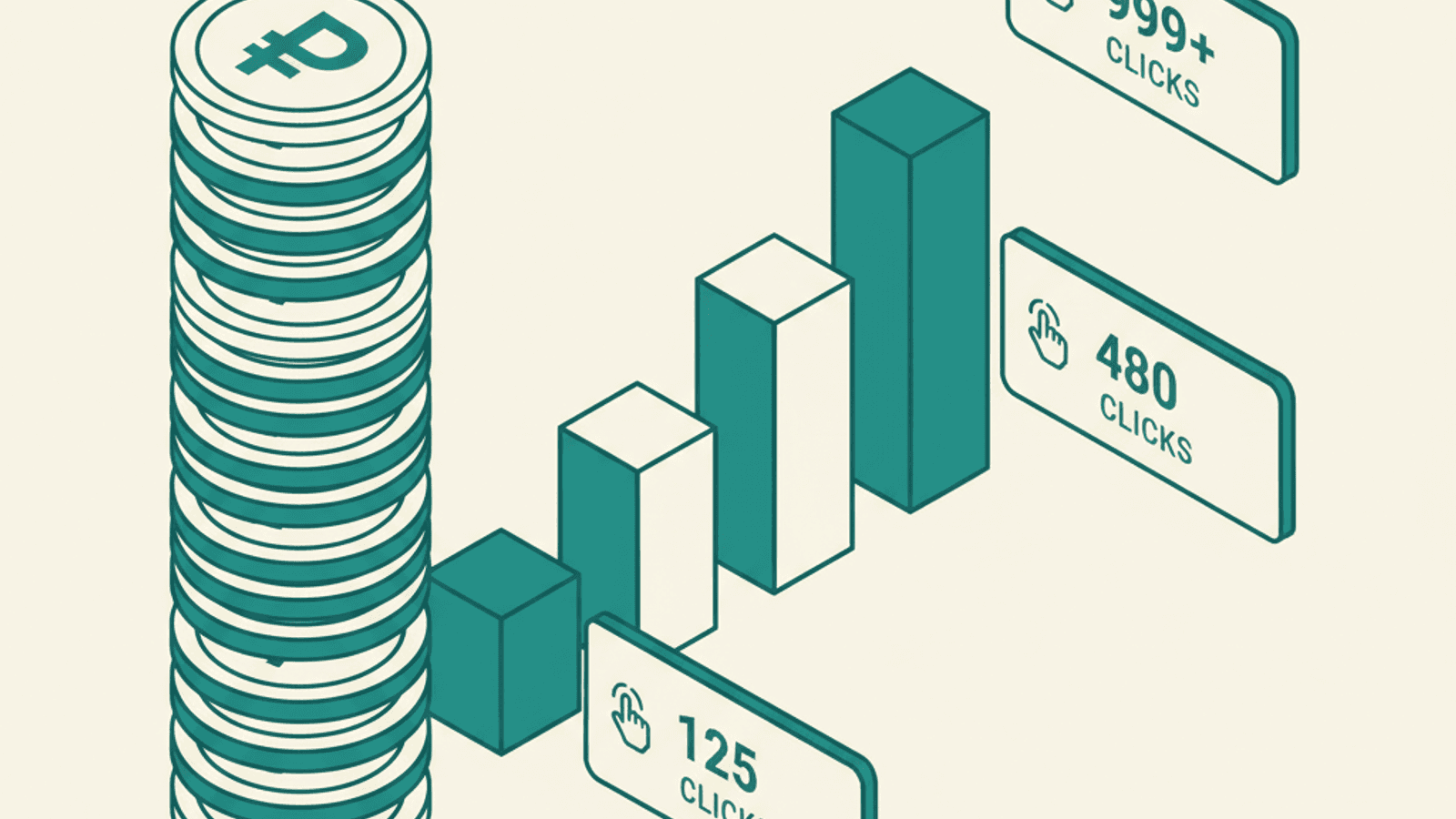
Google Ads in the Philippines can be extraordinarily cost-effective — or surprisingly expensive. The difference comes down to industry, campaign structure, keyword competitiveness, and how well the campaign is managed. A Philippine retail business might pay ₱8 per click for product-related keywords. A law firm targeting competitive legal terms in Metro Manila might pay ₱200–400 per click for the same position.
Understanding what drives these costs — and how to manage them intelligently — determines whether Google Ads is a profitable acquisition channel or an expensive experiment.
This guide breaks down Google Ads costs in the Philippines by industry, explains what drives pricing, identifies the hidden costs businesses often miss, and provides a framework for calculating whether campaigns are generating real return on investment.
The Two Cost Components of Google Ads
Before the numbers, it's important to understand that Google Ads involves two distinct cost centers:
Media spend (or ad spend): The money paid directly to Google for clicks. This is the core advertising cost. When a user clicks an ad, Google charges the advertiser a cost-per-click (CPC) that varies based on keyword competition, Quality Score, and bid strategy.
Management fees: The cost of expertise to set up, optimize, and manage the campaigns. This is paid to an agency, consultant, or in-house specialist. It is separate from media spend and does not go to Google.
Businesses that focus only on media spend when budgeting for Google Ads consistently underestimate the true cost of running effective campaigns.
Google Ads CPC by Industry in the Philippines (2026)
Cost-per-click benchmarks vary significantly by industry. The following estimates reflect current market conditions in the Philippines based on competitive analysis. These are averages — actual CPCs for specific keywords may be significantly higher or lower.
Legal Services: ₱150–500 per click
Legal keywords are among the most expensive in the Philippine market. Terms like "corporate lawyer Philippines" or "annulment attorney Makati" attract firms willing to pay premium CPCs because a single client engagement may be worth hundreds of thousands of pesos.
Finance and Insurance: ₱80–300 per click
Financial products — mortgages, business loans, insurance policies — carry high customer lifetime values. Lenders and insurance providers bid aggressively on commercial keywords.
Real Estate: ₱60–250 per click
Property-related searches in Metro Manila and key provincial markets attract competitive bidding from developers, brokers, and agents.
Healthcare and Medical: ₱40–150 per click
Medical keywords vary widely — general health information queries are less competitive than specific procedure-related terms like "LASIK surgery Philippines" or "dental implants Manila."
Education and Training: ₱25–80 per click
Online courses, professional certifications, and college enrollment keywords fall in a moderate competitive range.
Software and SaaS: ₱30–120 per click
B2B software keywords vary significantly. Enterprise software terms can reach the upper end; consumer apps are generally lower.
E-commerce and Retail: ₱8–40 per click
Product-specific keywords for physical goods tend to be less expensive than service keywords, though Shopping campaigns (which show product images and prices) operate on different pricing dynamics.
Home Services: ₱15–50 per click
Plumbing, electrical, aircon repair, and similar home service keywords in major Philippine cities sit in a moderate range.
Local Services (restaurants, salons, gyms): ₱5–20 per click
Local service keywords in non-competitive locations can be remarkably affordable. A neighborhood salon may pay ₱8–12 per click for "hair salon [city name]" terms.
Digital Marketing and SEO: ₱50–180 per click
An interesting category — agencies marketing their own services compete for keywords like "SEO agency Philippines" and "digital marketing services Manila" at moderate-to-high CPCs.
What Drives CPC Variation
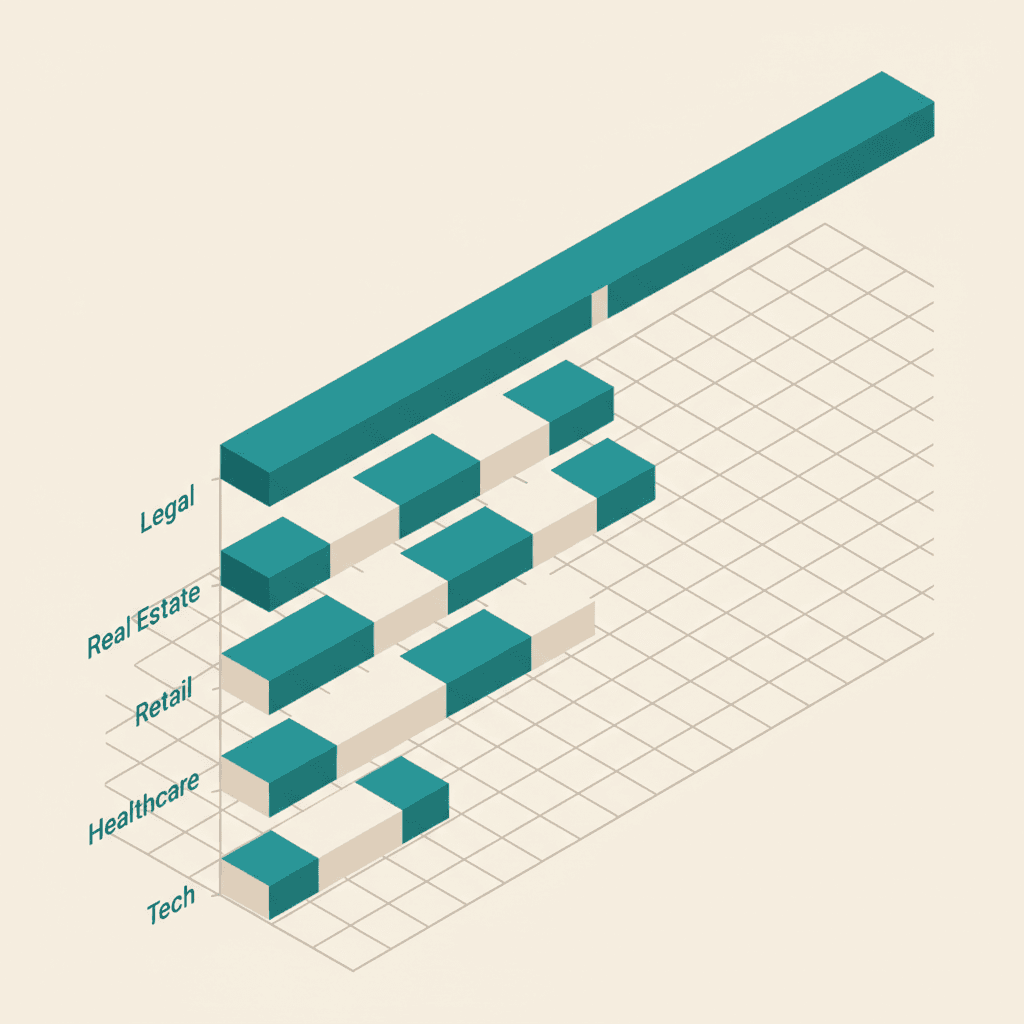
Understanding why CPCs differ helps predict costs for specific campaigns.
Competition: More advertisers bidding on the same keywords drives prices up. Legal and finance keywords are expensive because multiple well-funded businesses compete intensely for a limited pool of high-intent clicks.
Customer value: Google's auction system naturally prices keywords near the economic value they represent. Industries where acquiring one customer is worth ₱100,000+ support CPCs of ₱200–500 because the math still works. Industries with low customer value cannot economically support high CPCs.
Quality Score: Advertisers with higher Quality Scores pay less per click for equivalent positions. A Quality Score of 8 might pay 40–50% less per click than a competitor with a Quality Score of 4 for the same position. This is why investing in well-structured campaigns, relevant ad copy, and quality landing pages is not just aesthetic — it directly reduces CPC.
Match type: Broad match keywords generally have lower average CPCs but drive more irrelevant traffic. Exact match keywords typically have higher CPCs but much higher relevance and conversion rates. The right mix depends on campaign goals and budget.
Geographic targeting: CPCs for Metro Manila keywords are generally higher than for provincial cities. A dental clinic in Cebu City pays less per click than one in Makati for equivalent keywords, simply because competition in Manila is more intense.
Time of day and day of week: CPC varies by when ads run. Business hours typically see higher CPCs for B2B keywords; evenings may see higher CPCs for consumer products. Smart bid strategies adjust for these patterns automatically.
Budget Planning Framework
Setting a realistic Google Ads budget requires working backward from business goals, not forward from an arbitrary spending cap.
Step 1: Define the target cost per acquisition
What is a customer worth? If the average customer generates ₱50,000 in lifetime revenue with a 30% margin, the maximum tolerable cost per acquisition (CPA) is something less than ₱15,000 — the exact amount depends on competitive and cash flow considerations.
Step 2: Estimate the conversion rate
If the landing page converts at 3% (three out of every 100 visitors take the desired action), then generating one conversion requires approximately 33 clicks.
Step 3: Calculate required spend per conversion
At ₱100 CPC in a target industry, 33 clicks = ₱3,300 per conversion. At ₱250 CPC, 33 clicks = ₱8,250 per conversion. Both are below the ₱15,000 target CPA in this example, meaning Google Ads is economically viable.
Step 4: Set the minimum effective budget
To generate statistically meaningful data and allow Google's algorithm to optimize, campaigns need at least 30–50 conversions per month. At ₱3,300 per conversion, that's a minimum of ₱100,000/month in ad spend. At ₱8,250 per conversion, that's ₱250,000/month.
This framework often reveals that industries with high CPCs require larger budgets than businesses initially expect to run campaigns that generate actionable optimization data.
Hidden Costs Philippine Businesses Often Miss
Management fees: Most businesses understand they need to pay Google for clicks. Many underestimate management costs. Effective Google Ads management requires keyword research, campaign structuring, A/B testing, bid optimization, negative keyword management, landing page recommendations, and detailed reporting. This work requires expert time and tools.
Agency management fees in the Philippines typically range from ₱15,000–50,000/month for professional management, or 10–20% of ad spend — whichever is higher. Agencies offering management for ₱5,000/month are almost certainly not providing meaningful optimization; they're doing basic reporting. Businesses can evaluate how Google Ads management fees compare to other channels through the PPC management guide.
Landing page development: Running ads to a generic homepage or poorly designed page wastes budget on high bounce rates. A purpose-built landing page for each campaign typically improves conversion rates 50–200%. Building those pages requires design and development cost — often ₱15,000–50,000 per page depending on complexity.
Call tracking: Businesses that rely on phone calls as a primary lead channel need call tracking infrastructure to attribute calls to specific campaigns and keywords. This typically adds ₱2,000–5,000/month in software cost.
Data tools: Professional Google Ads management uses tools like SEMrush, Google Ads Editor, and analytics platforms that are not free. These may be bundled into agency retainers or billed separately.
Bidding Strategies and Their Cost Implications
Google Ads offers multiple bidding strategies, each with different cost profiles:
Manual CPC: The advertiser sets bids for each keyword manually. Maximum control, but requires constant monitoring. Suitable for experienced advertisers with small, tightly defined campaigns.
Target CPA: Google's algorithm sets bids to achieve a target cost per conversion. Effective once a campaign has 30–50 conversions of historical data. Can be highly efficient; requires strong conversion tracking.
Target ROAS: For e-commerce, bids are set to achieve a target return on ad spend. Requires purchase value tracking. Effective for product campaigns with meaningful revenue data.
Maximize Conversions: Google spends the set budget to maximize total conversions without a specific CPA target. Appropriate for campaigns building conversion data or with less cost sensitivity.
Enhanced CPC (ECPC): A hybrid — the advertiser sets base bids and Google adjusts upward or downward based on conversion probability signals. A reasonable middle ground while building data.
For most new campaigns in the Philippines, starting with Maximize Conversions to build data, then switching to Target CPA once 30–50 conversions have accumulated, is the recommended progression.
Comparing Google Ads Costs to SEO
The question of PPC versus SEO often comes down to cost economics over time. Google Ads provides immediate traffic at a continuous cost per click. SEO provides traffic that grows over time at a declining marginal cost.
The crossover point — where cumulative SEO investment becomes cheaper than equivalent PPC spend — typically occurs at twelve to twenty-four months for competitive keywords. Businesses that started investing in search engine optimization alongside their PPC campaigns three years ago are now generating significant organic traffic that would cost ₱100,000+ per month to replicate through paid search. An SEO audit is a practical first step before making final budget allocation decisions — it clarifies the organic opportunity and identifies technical issues that may be costing rankings regardless of PPC spend.
For a comprehensive understanding of how to run effective campaigns before comparing them to alternative channels, the complete Google Ads guide for Philippine businesses covers campaign structure, targeting, and optimization in detail.
ROI Calculation in Practice
Calculating Google Ads ROI requires connecting ad spend to actual revenue — not just leads or clicks.
Example calculation for a Philippine B2B software company:
- Monthly ad spend: ₱80,000
- Management fee: ₱20,000
- Total monthly cost: ₱100,000
- Average monthly clicks: 800 (at ₱100 CPC)
- Landing page conversion rate: 4%
- Monthly leads generated: 32
- Lead-to-customer conversion rate: 15%
- New customers per month: 4.8 (≈5)
- Average customer value: ₱60,000 (first year)
- Monthly revenue attributed: ₱300,000
- ROAS: ₱300,000 / ₱100,000 = 3×
A 3× ROAS means every peso spent generates three pesos in revenue. Whether this is acceptable depends on gross margin. At 40% margin, ₱300,000 in revenue produces ₱120,000 in gross profit against ₱100,000 in total cost — a thin but positive margin that improves as landing page conversion rates are optimized.
Improving the landing page conversion rate from 4% to 6% in this example adds two more customers per month at no additional ad spend, immediately improving ROAS to 4.5× — the kind of gain that makes Google Ads economics work.
This is why web design quality is not separable from Google Ads ROI. Landing pages are the conversion point; ad spend is wasted when they underperform.
Understanding overall digital marketing costs in the Philippine context helps set realistic expectations for total program investment across all channels.
Frequently Asked Questions
What is the average CPC for Google Ads in the Philippines?+
Across all industries, the average CPC in the Philippines is lower than in Western markets — roughly ₱15–50 for most consumer-facing categories and ₱80–400 for high-value professional services. The range is wide because industry competitiveness varies enormously.
What is the minimum budget to start Google Ads in the Philippines?+
The minimum budget to generate meaningful data is approximately ₱15,000–25,000 per month in ad spend for low-competition categories. Underspending produces too few clicks and conversions to optimize the campaign intelligently. For competitive industries, ₱50,000+ per month is often necessary to generate sufficient volume.
Why are my Google Ads more expensive than I expected?+
Common reasons include low Quality Scores (due to poor ad relevance or landing page quality), highly competitive keywords without narrowing to more specific long-tail terms, overly broad match type settings driving irrelevant clicks, or a geographic target that includes high-competition areas unnecessarily.
Does Google charge for impressions or only for clicks?+
Standard Search campaigns charge per click (CPC). Display and Video campaigns can be purchased on a CPM (cost per thousand impressions) or CPV (cost per view) basis. Performance Max campaigns optimize across multiple pricing models automatically.
How do I know if my Google Ads are delivering good ROI?+
Track all the way through the funnel: from click to lead to customer. Compute cost per lead, cost per acquisition, and revenue per customer. Compare the revenue attributed to Google Ads against total spend (including management fees). A ROAS of 3× or better at healthy margins indicates the channel is working. Below 2× in most industries suggests campaign optimization is needed.