Google Ads for Philippine Businesses: 2026 Guide
A complete guide to Google Ads for businesses in the Philippines — campaign types, PH-specific bidding, budget recommendations, common mistakes, and measuring ROAS.

Google Ads is the most powerful intent-based advertising platform available to Philippine businesses in 2026. Unlike social media advertising, which interrupts users who are doing something else, Google Ads appears at the exact moment someone is actively searching for what a business offers. That timing advantage — reaching people who have already signaled intent — is why Google Ads consistently delivers lower cost-per-lead and higher conversion rates than most other paid channels.
But the platform is complex. Campaign types, bidding strategies, audience targeting, Quality Scores, and account structure decisions all significantly affect performance. Businesses that approach Google Ads without understanding its mechanics typically overspend, underperform, and conclude — incorrectly — that it doesn't work for them.
This guide covers how Google Ads works, the campaign types available, PH-specific considerations for bidding and budgets, common mistakes, and how to measure whether campaigns are delivering real return.
How Google Ads Works
At its core, Google Ads is an auction system. When someone types a query into Google, the platform runs a real-time auction among advertisers who have bid on keywords related to that query. The winner's ad appears in the search results. But the winner is not simply the highest bidder — Google uses a metric called Ad Rank to determine placement.
Ad Rank = Bid × Quality Score × Expected Impact of Extensions
Quality Score is Google's assessment of the relevance and quality of an ad, its keyword, and the landing page it points to. Scores range from 1 to 10. A high Quality Score means an advertiser can achieve the same or better ad position than a competitor while paying less per click. This is why well-optimized campaigns consistently outperform poorly managed ones at equivalent or lower spend levels.
For Philippine businesses, this dynamic is particularly important. Local advertisers often compete against international brands with larger budgets. A higher Quality Score is a way to compete effectively without simply outspending.
Campaign Types Available in 2026
Google's ecosystem has expanded significantly. Understanding which campaign types serve which business goals prevents misallocating budget.
Search Campaigns
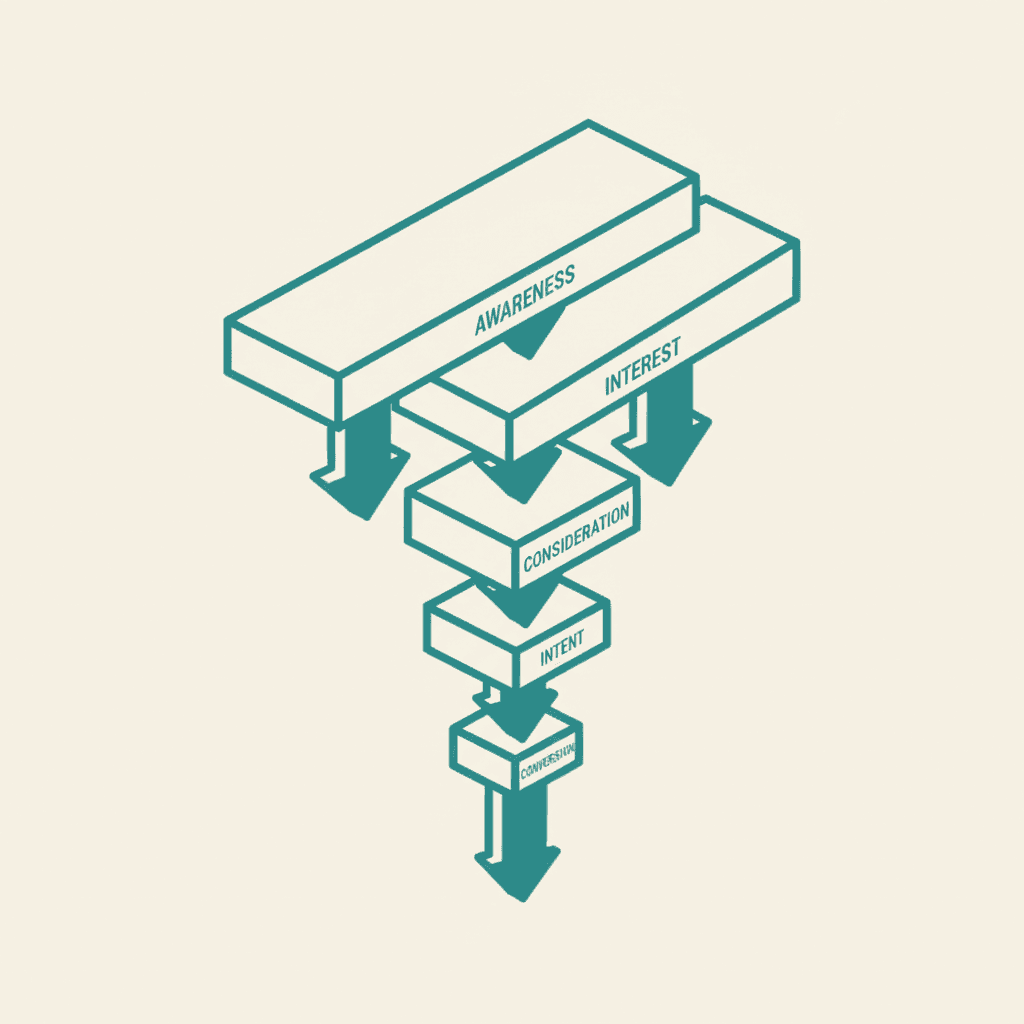
Search campaigns show text ads to users who type relevant queries into Google Search. This is the foundational campaign type for most businesses — it targets users at the highest point of purchase intent. A user searching "accountant for small business Makati" is further along the buying journey than someone passively scrolling a social feed.
Search campaigns are appropriate for almost any business with clearly defined keywords and a service or product that people actively search for. PPC management that starts with search campaigns and expands to other types as data accumulates is the most reliable approach for businesses new to Google Ads.
Shopping Campaigns
Shopping campaigns are designed for e-commerce businesses. Rather than text ads, they show product listings with images, prices, and store names directly in search results. They pull product data from a Google Merchant Center feed.
For Philippine e-commerce businesses competing on price and product range, Shopping campaigns (or their successor, Performance Max for retail) are often more efficient than search campaigns for driving product sales.
Display Network Campaigns
Display campaigns show image or video ads across Google's network of partner websites — millions of sites that have opted into the Google Display Network. Display is a broad-reach, awareness-oriented channel. It does not target search intent, but it reaches users while they browse other content.
Display is most effective for:
- Remarketing to users who have already visited the site
- Brand awareness at scale
- Visually-driven product categories where imagery drives interest
YouTube Ads (Video Campaigns)
YouTube is the second-largest search engine in the Philippines by query volume. Video campaigns on YouTube reach users through in-stream ads (skippable and non-skippable) and in-feed ads that appear alongside search results and related content.
YouTube advertising is particularly effective for products or services that benefit from demonstration, education, or emotional brand storytelling. The Philippines has some of the highest YouTube engagement rates in Southeast Asia, making it a high-value placement for the right audience.
Performance Max Campaigns
Performance Max (PMax) is Google's fully automated, cross-channel campaign type introduced in 2022 and now dominant in 2026. A single PMax campaign runs across Search, Display, YouTube, Gmail, Maps, and Discover simultaneously, using machine learning to allocate budget across channels based on predicted conversion probability.
PMax delivers excellent results for businesses with strong conversion data and clear conversion goals. It requires less manual management but demands high-quality creative assets (images, videos, headlines) and clear conversion tracking to perform well. Businesses with limited conversion data or ambiguous goals tend to see poor results from PMax until historical data accumulates.
Local Campaigns
For businesses with physical locations, Local campaigns drive foot traffic by showing ads across Search, Maps, YouTube, and Display to users near the location. Particularly relevant for restaurants, retail stores, clinics, and other location-dependent businesses in the Philippines.
PH-Specific Bidding Considerations
Google Ads bidding in the Philippines has several characteristics that differ from more mature markets.
Lower baseline CPCs: Cost-per-click rates in the Philippines are generally lower than in the US, UK, or Australia for equivalent keywords. This means Philippine advertisers can achieve significant click volume at budgets that would be insufficient in those markets. However, competitive industries — legal, finance, insurance, real estate — have seen CPCs rise sharply over the past three years as more businesses have entered Google Ads.
Mobile dominance: Over 85% of Google searches in the Philippines happen on mobile devices. Campaigns that are not mobile-optimized — ads with poor mobile landing pages, bid adjustments that don't account for mobile performance differences — leave significant performance on the table. Set mobile bid adjustments based on actual conversion data from mobile versus desktop sessions.
Geographic targeting: The Philippines is an archipelago with significant geographic variation in market size and competition. A campaign targeting Metro Manila competes in a very different landscape than one targeting Davao or Iloilo. For businesses with defined service areas, geographic bid adjustments — increasing bids in high-value locations and reducing or excluding low-value ones — improve efficiency.
Language targeting: While English-language ads perform well for professional and B2B audiences, Filipino-language ad copy can outperform English for certain consumer product categories. Testing both is worthwhile for consumer-facing businesses.
Seasonal patterns: Philippine consumer behavior has distinct seasonal patterns — peak shopping periods around payday cycles (typically the 15th and 30th of each month), Christmas (October through December), and back-to-school periods. Budget planning should account for these patterns rather than maintaining flat monthly spend.
Budget Recommendations
The minimum effective budget for Google Ads in the Philippines depends on industry competitiveness and campaign goals.
Low-competition niches (local services, niche products): ₱15,000–25,000/month in ad spend may be sufficient to generate meaningful volume.
Moderate competition (professional services, regional retail): ₱30,000–60,000/month in ad spend to maintain consistent presence.
High competition (finance, legal, insurance, real estate): ₱80,000–200,000+/month to compete effectively. Underspending in high-competition categories typically results in limited impression share, meaning ads appear infrequently or not at all.
A practical rule: set the daily budget high enough that campaigns aren't limited by budget for at least 60–70% of the day. Budget-limited campaigns don't accumulate enough data to optimize effectively.
Account Structure for Philippine Campaigns
Well-structured accounts outperform poorly structured ones, often dramatically. The fundamental principle is that campaigns and ad groups should be tightly themed — each ad group containing keywords that are closely related and pointing to a landing page specifically relevant to those keywords.
A poor structure groups unrelated keywords into the same ad group and points them to a generic homepage. A strong structure has each ad group covering a tight keyword cluster and pointing to a landing page that directly addresses what those keywords signal.
For a Philippine law firm, for example:
- Campaign: Legal Services Philippines
- Ad Group: Corporate Lawyer Manila → Landing page: Corporate law services page
- Ad Group: Business Registration Philippines → Landing page: Business registration services page
- Ad Group: Contract Lawyer Philippines → Landing page: Contract drafting services page
This level of specificity produces higher Quality Scores, better ad relevance, and lower CPCs.
Common Mistakes Philippine Businesses Make
Running broad match keywords without negative keyword lists: Broad match keywords in Google Ads capture a wide range of queries, many of which are irrelevant. A legal firm bidding on "lawyer" without negative keywords will pay for clicks from people searching for "lawyer jokes" or "Grey's Anatomy lawyer character." Building comprehensive negative keyword lists is a basic but often neglected task.
Sending all traffic to the homepage: Homepages are designed for orientation, not conversion. Visitors who land on a homepage after clicking an ad about a specific product or service face an additional navigation step before reaching relevant content. Custom landing pages for specific ad groups significantly improve conversion rates.
Ignoring Quality Score signals: Quality Scores below 5 are costing money. Low scores indicate that ads, keywords, and landing pages are misaligned. Improving relevance at each of these points raises Quality Scores, lowers CPCs, and improves position.
Not tracking conversions properly: Google Ads optimization depends on conversion data. Campaigns that don't have properly set up conversion tracking — form submissions, phone calls, purchases — cannot optimize toward actual business outcomes. The algorithm will spend budget efficiently toward clicks, but not toward the actions that matter.
Setting and forgetting: Google Ads requires active management. Industry CPCs shift, competitor activity changes, Quality Scores fluctuate, and new search terms emerge. Campaigns that aren't reviewed and adjusted at least biweekly consistently underperform those that receive regular optimization.
Comparing PPC with Organic Search
Understanding the relationship between PPC and SEO is important for budget allocation. The two channels are complementary, not competing.
SEO builds long-term organic presence that doesn't require continuous spend to maintain. PPC provides immediate traffic while organic authority builds. Many Philippine businesses that invest in both channels find that their PPC campaigns become more efficient over time as brand recognition grows from organic search exposure — branded search traffic increases, click-through rates rise, and conversion rates improve.
The practical implication: PPC is not a substitute for SEO investment, and SEO is not a reason to avoid PPC. They serve different functions in the acquisition funnel.
Measuring ROAS and Campaign Success
Return on ad spend (ROAS) is the primary metric for evaluating Google Ads performance: revenue generated divided by ad spend. A ROAS of 4 means every ₱1 spent on ads generates ₱4 in revenue.
Target ROAS varies by industry and business model. E-commerce businesses typically target ROAS of 4–8×. Lead generation businesses use cost per lead and cost per acquisition as primary metrics rather than direct revenue ROAS.
Beyond ROAS, the metrics that indicate campaign health:
- Impression share: What percentage of available impressions the campaign is capturing. Low impression share (under 40%) with a limited budget suggests underspending.
- Click-through rate (CTR): Higher CTR indicates ads are relevant to the queries triggering them. Industry benchmarks vary; under 2% for search ads typically suggests poor ad relevance.
- Conversion rate: Of users who click, what percentage complete the desired action. Conversion rate problems are usually landing page issues, not ad issues.
- Cost per conversion: Total spend divided by conversions. The target depends on the business's customer lifetime value and margin.
For a deeper understanding of how Google Ads costs compare across Philippine industries and what to budget by vertical, the specific cost breakdown covers CPCs, management fees, and ROI calculation in detail.
For businesses weighing Google Ads against other platforms, comparing Facebook Ads versus Google Ads outlines the key differences in intent targeting, audience approach, and which scenarios favor each platform.
Working with a Google Ads Specialist
Managing Google Ads effectively requires time, technical knowledge, and continuous attention. For most Philippine businesses, the economics favor working with a specialist — either an agency offering PPC management services or a dedicated in-house hire for larger programs.
The certification to look for in a Google Ads agency is Google Partner or Premier Partner status. Premier Partner status indicates that the agency meets higher performance thresholds and has passed advanced certifications. It is a necessary but not sufficient qualifier — look for case studies and references alongside certifications.
An SEO audit is also valuable context before launching Google Ads — understanding the organic landscape helps identify which keywords represent genuine opportunities versus unwinnable competitive positions.
Frequently Asked Questions
How much does Google Ads cost for a small business in the Philippines?+
A realistic starting budget for meaningful results is ₱15,000–30,000 per month in ad spend for low-competition niches, plus management fees if working with an agency. Highly competitive industries require ₱50,000–100,000+ in ad spend to generate consistent volume. Setting budgets below minimum effective thresholds produces inconclusive results and wastes money.
Can a Philippine business run Google Ads without a specialist?+
Yes, but the learning curve is steep and mistakes are costly. Google's Smart Campaigns and Performance Max offer simplified entry points, but self-managed campaigns without proper structure, negative keyword lists, and conversion tracking typically underperform professionally managed accounts. The agency fees paid for professional management are usually offset by improved efficiency.
What is a good Quality Score for Google Ads?+
Quality Scores of 7–10 are considered good. Scores below 5 indicate misalignment between keywords, ad copy, and landing pages and will result in higher CPCs and lower ad positions. Improving Quality Score is one of the highest-leverage activities in Google Ads management.
How long before Google Ads campaigns are fully optimized?+
Most campaigns reach a stable optimization point at eight to twelve weeks. The first four weeks are dominated by Google's machine learning "learning phase," during which performance fluctuates as the algorithm collects conversion data. Significant campaign changes (budget, targets, bidding strategy) restart this learning phase.
Should Google Ads be paused during slow business periods?+
Not necessarily. Maintaining campaign activity preserves historical data and avoids restarting the learning phase. A better approach is to reduce daily budgets during slow periods rather than pausing entirely. For strongly seasonal businesses with defined off-seasons, a complete pause may be appropriate — but should be planned rather than reactive.