Facebook Ads vs Google Ads: Where to Invest?
Facebook Ads and Google Ads serve different purposes. Here's how to decide which platform deserves your budget — and how Philippine businesses are using both effectively.

Facebook Ads and Google Ads are the two dominant paid advertising platforms in the Philippines. Most businesses with digital marketing budgets use at least one of them. Many use both. But the platforms are fundamentally different in how they work, who they reach, and what outcomes they deliver best.
Choosing between them — or deciding how to split budget across both — should not be based on which platform is more familiar or which one someone recommended at a networking event. It should be based on understanding how each platform operates and matching that to the specific business objective.
This article explains the core differences, compares costs and targeting capabilities, outlines the best use cases for each, presents Philippine platform usage data, and offers a practical framework for deciding where to invest.
The Core Difference: Intent vs Interest
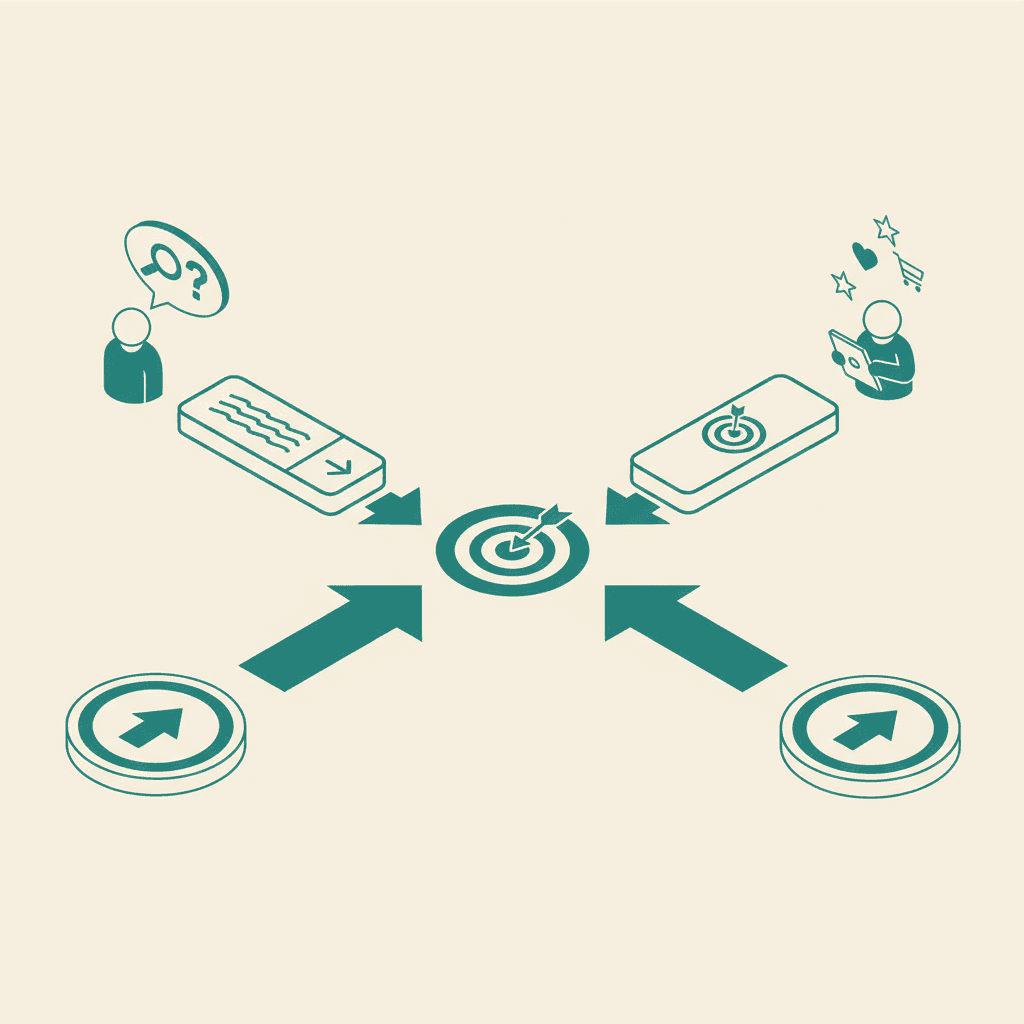
The most important distinction between the two platforms is the mindset of the user being reached.
Google Ads reaches users at the moment they express intent. Someone who types "accounting software Philippines" into Google is actively looking for a solution. They have a problem and are seeking to solve it right now. This intent signal is extremely powerful for conversion-focused campaigns because the audience has already done the most important work — they've identified that they need something.
Facebook Ads (and Instagram Ads, which run through the same Meta Ads platform) reaches users based on who they are — their demographics, interests, behaviors, and past interactions. A user scrolling through Facebook is not necessarily looking to buy anything. They are doing something else when the ad appears. This interruption model requires different creative, different messaging, and different conversion expectations.
The practical implication: Google Ads tends to deliver higher conversion rates for bottom-of-funnel campaigns because the audience is self-selected. Facebook Ads tends to deliver better results for awareness, discovery, and top-of-funnel reach because it can put a brand in front of precisely defined audiences at scale, regardless of whether those users were actively searching.
Philippine Platform Usage Data (2026)
Understanding how Filipino consumers actually use these platforms frames the investment decision.
Facebook remains the dominant digital platform in the Philippines by virtually every measure. With over 90 million Filipino users and an average daily usage of nearly four hours, Facebook is not just a social media platform in the Philippine context — it is a primary communications infrastructure. Business pages, local buy-and-sell groups, event discovery, customer service, and news consumption all happen on Facebook in volumes that dwarf equivalent behaviors in most other markets.
Google processes over two billion searches from the Philippines monthly. YouTube — owned by Google — is the dominant video platform and reaches nearly every internet user in the country. Google's search dominance (97%+ market share) means that search-based advertising through Google Ads reaches virtually every active internet user who expresses search intent.
TikTok has grown dramatically since 2023 and now represents a significant audience for consumer product discovery, particularly among users under 35. While TikTok Ads are not the focus of this article, they should be part of any complete paid media strategy for consumer brands.
The takeaway for Philippine businesses: both platforms have massive reach. The question is not which one reaches more people — it's which one reaches the right people with the right message at the right moment.
Audience Targeting: How Each Platform Works
Facebook Ads Targeting
Facebook's targeting capabilities are built around audience profile data:
Demographic targeting: Age, gender, location, language, education, job title, relationship status.
Interest targeting: Based on pages liked, content engaged with, app usage, and behavioral signals. A business selling fitness equipment can target users who have liked fitness pages, health brands, and workout apps.
Behavioral targeting: Purchasing behaviors, device usage, travel patterns, and other activity signals aggregated from platform behavior and Meta's partner data.
Custom audiences: Upload a customer list (email addresses, phone numbers) and Facebook matches them to profiles. This is powerful for remarketing to existing customers or excluding them from acquisition campaigns.
Lookalike audiences: Facebook identifies users who share characteristics with a custom audience (existing customers, website visitors) and targets new users with similar profiles. Often the highest-performing cold audience targeting strategy.
Retargeting: Show ads to users who have visited the website, engaged with social posts, or viewed videos — available through the Meta Pixel.
Google Ads Targeting
Google's targeting is primarily keyword and intent-based, with additional audience layering:
Keyword targeting: Ads appear when users search specific keywords or related terms. The most direct expression of intent available in advertising.
Audience signals: In-market audiences (users who Google has identified as actively researching a category), affinity audiences (users with demonstrated interests), and custom intent audiences (users who have searched for specific terms).
Remarketing: Show ads to past website visitors or previous customers across the Google Display Network and YouTube.
Demographic and geographic targeting: Age, gender, household income, and location targeting available as bid adjustments or campaign settings.
Topic targeting: For Display campaigns, target websites covering specific topics rather than individual keyword searches.
The fundamental difference: Facebook knows who you are. Google knows what you want right now. Both are valuable, and they can be combined for comprehensive reach across the funnel.
Cost Comparison
Cost-per-click and cost-per-result differ significantly between platforms, and vary by industry within each platform.
Facebook Ads Costs in the Philippines
Average CPM (cost per 1,000 impressions): ₱80–300 depending on audience size, targeting specificity, and competition.
Average CPC: ₱5–30 for most consumer audiences. Higher for competitive B2B audiences (₱20–60).
Cost per lead (through Facebook Lead Ads): ₱80–500 depending on industry, offer quality, and targeting precision.
Facebook costs have risen since 2021 as more advertisers entered the platform, but remain significantly lower than Google Ads in absolute CPC terms. The caveat: Facebook's lower CPC reflects lower intent — more clicks are needed to produce the same number of conversions.
Google Ads Costs in the Philippines
As covered in the detailed Google Ads cost breakdown, CPCs range from ₱8–500+ depending on industry. High-intent commercial keywords cost more per click than Facebook's interest-based targeting, but often convert at significantly higher rates.
The Apples-to-Apples Comparison
Comparing CPC across platforms is misleading. The metric that matters is cost per conversion or cost per acquisition — how much it costs to generate a qualified lead or a sale.
A Facebook lead at ₱150 CPL and a Google lead at ₱500 CPL are not obviously better or worse without knowing how they convert to customers. If the Facebook leads convert at 5% and Google leads convert at 25%, the effective cost per customer is ₱3,000 from Facebook and ₱2,000 from Google — Google wins despite the higher CPL.
Always evaluate platforms based on full-funnel cost, not top-of-funnel CPC.
Best Use Cases: Facebook Ads
Facebook Ads excels in these scenarios:
Consumer product discovery: Filipino consumers discover new brands and products heavily through Facebook. Fashion, food, beauty, health and wellness, home goods — categories where visual presentation drives interest and the purchase is driven by desire rather than intent.
Local service businesses: A dental clinic, fitness studio, or salon can target Facebook users within a five-kilometer radius, reaching a hyper-local audience for a fraction of the cost of broader digital channels.
Community-based marketing: Facebook Groups remain an important part of Filipino online community life. Facebook Ads can amplify content that resonates in community contexts.
E-commerce retargeting: Users who viewed products on an e-commerce site but didn't purchase can be retargeted on Facebook and Instagram with dynamic ads showing the exact products they browsed.
Brand awareness at scale: For campaigns designed to maximize reach and brand recognition rather than immediate conversion, Facebook's CPM pricing and broad audience reach make it cost-effective.
Lead generation for lower-cost services: Facebook Lead Ads — which collect contact information without requiring the user to leave Facebook — often produce lower CPL for simple offers than Google search campaigns.
Best Use Cases: Google Ads
Google Ads excels in these scenarios:
High-intent commercial searches: Users searching for specific products or services to buy now. "Buy [product] Philippines", "hire [service] Manila", "[procedure] cost Philippines" — these queries signal strong purchase intent that Google captures and Facebook cannot replicate.
Competitive B2B categories: Decision-makers researching vendors, software, and professional services use Google search as a primary research channel. Google Ads places businesses in front of these buyers at the moment of active research.
Local services with search demand: Plumbers, electricians, repair services, medical specialists, and legal firms are searched for on Google when needed. Local SEO and Google Ads local campaigns capture this demand.
Remarketing to high-value visitors: Google Display Network remarketing reaches past website visitors while they browse other sites — keeping the brand visible during long consideration periods.
YouTube advertising: For categories where video content drives consideration (software demos, travel, education, food), YouTube advertising reaches an engaged Philippine audience at scale.
Social Media Marketing as a Complement
Social media marketing and paid social advertising are closely related but distinct. Organic social media builds community and brand presence that makes paid social more effective — users who have seen a brand's content organically are more likely to convert when retargeted through paid campaigns.
The most effective Philippine brands in 2026 treat organic and paid social as integrated rather than competing. Organic content builds the audience and context; paid promotion amplifies what's working to new audiences. A broader understanding of how these channels fit together is covered in the digital marketing services guide.
Combining Both Platforms
The businesses gaining the most ground in the Philippine market are using Facebook Ads and Google Ads in complementary ways:
Google Search captures existing demand — users already looking for what the business offers.
Facebook Ads creates new demand — making users aware of a product or service they weren't actively seeking.
Google Display and Facebook Retargeting keep the brand visible to users who showed interest but didn't convert.
A practical multi-platform approach:
- Run Google Search campaigns to capture high-intent queries
- Run Facebook Ads to build awareness among defined target audiences
- Retarget website visitors with both Google Display and Facebook/Instagram ads
- Use Facebook Lead Ads for lower-friction lead capture at the top of funnel
- Nurture Facebook leads through email or CRM into the Google-captured intent pool
For a comprehensive view of how paid advertising fits into the broader digital strategy, the complete Google Ads guide for Philippine businesses covers campaign architecture and optimization. The broader question of how PPC compares to organic search investment is covered separately.
Professional PPC management that spans both platforms — unified under a coherent strategy with consistent attribution — typically outperforms platform-specific campaigns managed in isolation.
Decision Framework
Use this framework to allocate budget between the platforms:
If the product or service is searched for actively: Google Ads first. Then add Facebook for awareness and retargeting.
If the product or service is discovered rather than searched: Facebook Ads first. Then add Google Remarketing to capture users who visit the site after discovery.
If the target customer is a professional or B2B decision-maker: Google Search for intent capture; LinkedIn may outperform Facebook for professional audiences.
If budget is very limited: Test both platforms with equal small budgets for 60 days, then allocate 70%+ to whichever delivers lower cost per acquisition.
If the product has a visual component (fashion, food, home goods, beauty): Instagram ads (run through Meta Ads) often outperform Google Display for discovery.
Frequently Asked Questions
Which platform is better for Philippine businesses: Facebook Ads or Google Ads?+
Neither is universally better — they serve different purposes. Google Ads captures users who are actively searching; Facebook Ads creates awareness among defined audiences. Most businesses benefit from using both strategically. If forced to choose one starting point, consider whether the primary goal is capturing existing demand (Google) or creating new demand (Facebook).
Why does Facebook Ads have lower CPC than Google Ads?+
Facebook's lower CPC reflects the difference in user intent. Users on Facebook are not actively searching to buy — they're browsing their feed. Lower intent means more clicks are needed to produce the same number of conversions, so while the CPC is lower, the cost per conversion often ends up comparable or higher for bottom-of-funnel goals.
Can I run both Facebook Ads and Google Ads with a limited budget?+
Yes, but split budgets below ₱30,000 total per month may be too thin to gather meaningful optimization data from either platform. A focused investment in one platform initially, then expanding, often outperforms splitting a limited budget across both.
How do I track which platform is driving conversions?+
Proper attribution requires Google Analytics 4 with conversion goals configured, UTM parameters on all ad URLs, the Meta Pixel on the website, and Google Ads conversion tracking via tag. Without these in place, attribution data will be incomplete and investment decisions will be based on incomplete information.
Is TikTok Ads worth considering alongside Facebook Ads and Google Ads for Philippine businesses?+
For consumer brands targeting users under 35, TikTok Ads have become a significant channel in the Philippines since 2024. The platform's cost-per-reach is often lower than Facebook, and its algorithm surfaces content to relevant audiences even for smaller budgets. It's worth testing alongside rather than instead of the established platforms.