On-Page SEO Benefits: Why It Matters
On-page SEO delivers compounding returns — better rankings, more traffic, higher conversions. Here's exactly what it does for your business and why.
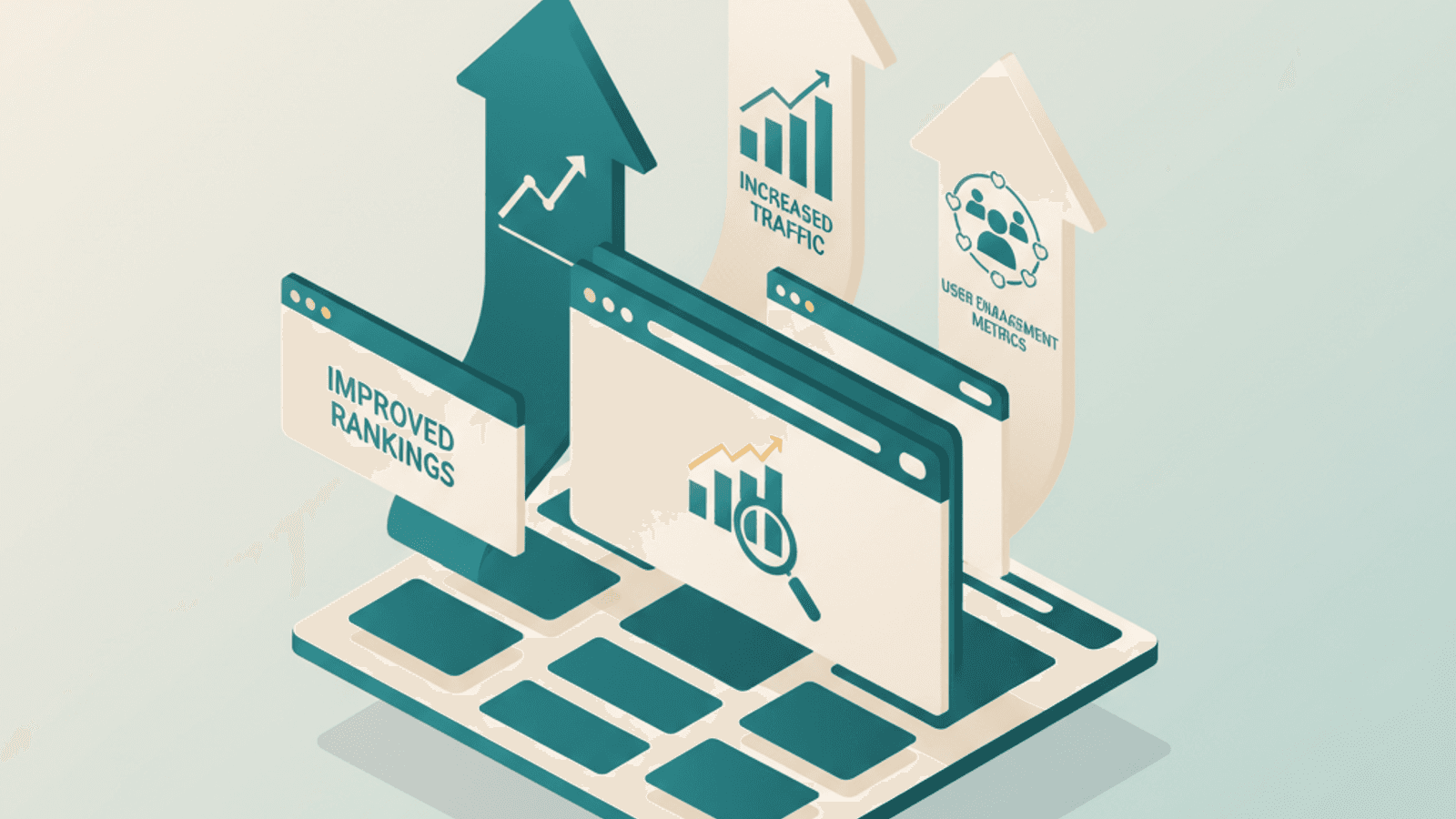
Every peso spent on advertising stops working the moment the budget runs out. On-page SEO is different. The improvements you make to your pages keep delivering traffic, conversions, and authority for months and years — often without additional cost.
That is the core appeal of on-page SEO: it compounds. A well-optimized page earns a ranking, that ranking drives traffic, that traffic improves behavioral signals, those signals reinforce the ranking. The cycle builds on itself.
But the benefits of on-page SEO extend well beyond rankings. This guide covers what on-page SEO actually delivers for businesses — with specific context for the Philippine market and the realities of SEO in 2026.
Benefit 1: Higher Rankings for Targeted Keywords
The most direct benefit of on-page SEO is improved ranking positions for the keywords your customers are actually searching.
When your page clearly communicates its topic through a well-structured title tag, a logical heading hierarchy, and content that comprehensively covers the subject, Google has what it needs to rank you confidently. Pages that send mixed or weak on-page signals — unclear titles, thin content, missing semantic coverage — get pushed down in favor of pages that do the job better.
This matters at every position. Moving from position 8 to position 3 for a meaningful keyword can multiply clicks by 4 to 6 times. Moving from page 2 to page 1 is even more dramatic — most users never scroll past the first page of results.
For a detailed explanation of what drives these ranking signals, see complete on-page SEO guide.
Benefit 2: Compounding Organic Traffic Growth
Paid traffic is linear. You spend ₱10,000 on ads, you get a proportional number of clicks. When you stop spending, the traffic stops.
On-page SEO works differently. A well-optimized page that earns a top-5 ranking continues to receive traffic indefinitely. As you build more optimized pages, they accumulate collectively. Your site's overall organic traffic compounds — each page adds to a growing baseline rather than requiring repeated investment to maintain.
In the Philippines, where digital advertising costs have risen significantly in recent years, this distinction matters for marketing budgets. Organic search traffic through SEO has one of the highest returns on investment of any digital channel because the marginal cost of an additional visitor, once ranked, is effectively zero.
Benefit 3: Improved User Experience
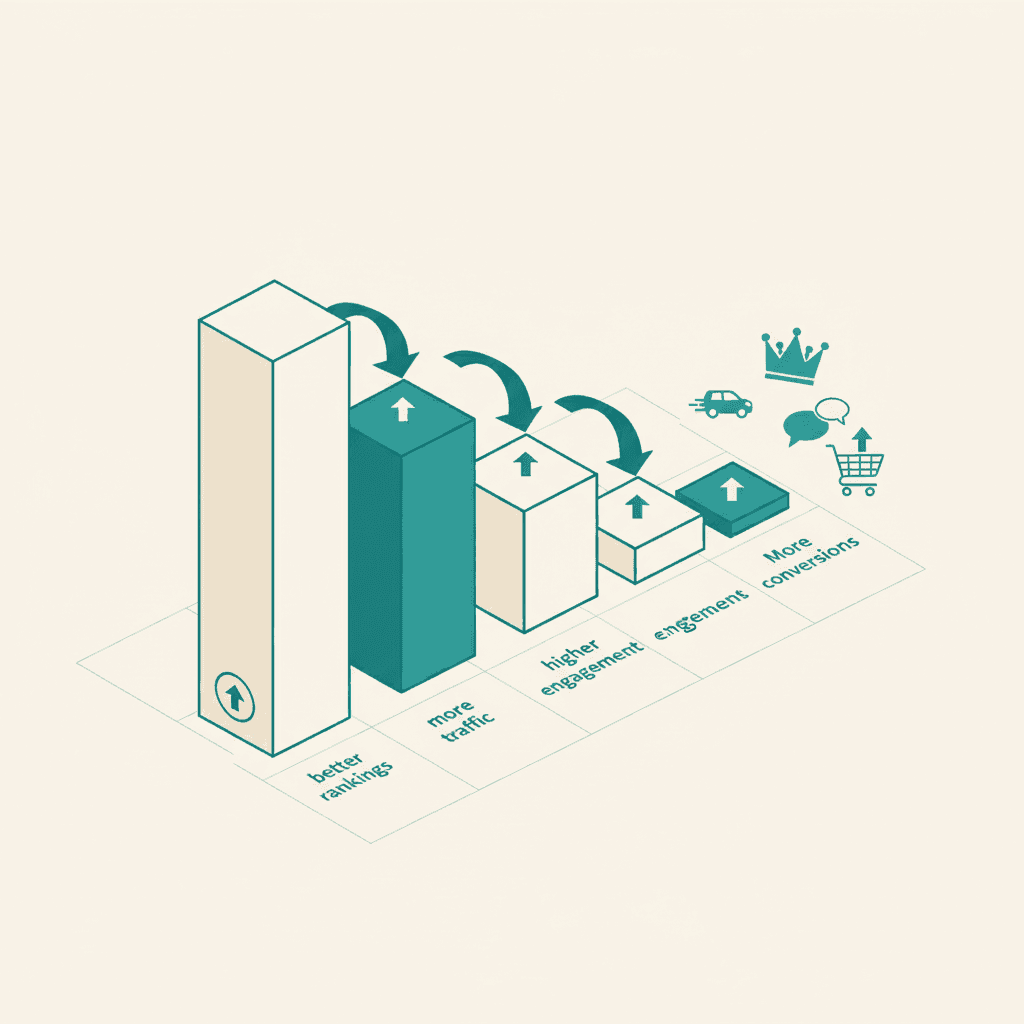
On-page SEO and user experience have converged more in 2026 than at any previous point. Google's page experience signals — Core Web Vitals, mobile usability, HTTPS — are all on-page and technical factors that simultaneously improve how real users experience your site.
A page optimized for on-page SEO is typically:
- Faster to load (optimized images, lean code)
- Easier to read (clear headings, short paragraphs, logical structure)
- More mobile-friendly (responsive layout, touch-friendly navigation)
- More trustworthy (author information, accurate metadata, clear sourcing)
These improvements don't just help rankings. They reduce bounce rates, increase time on page, and improve the probability that a visitor takes a desired action — all of which have measurable business value independent of SEO.
Benefit 4: Higher Click-Through Rates
Your ranking position determines how many people see your page. Your title tag and meta description determine how many of those people click.
A well-written title tag communicates exactly what the page offers, matches the user's search intent, and stands out in the SERP. A compelling meta description gives users a reason to choose your result over the four others on the same page.
Click-through rate improvements from on-page SEO work are often immediate. Unlike ranking changes that take weeks, a better title tag can increase clicks starting from Google's next crawl. For pages already ranking on page 1, CTR optimization is frequently the highest-leverage on-page improvement available.
Benefit 5: Better Conversion Rates
Getting traffic is one goal. Converting that traffic into customers, leads, or subscribers is the goal that actually grows a business.
On-page SEO improves conversions in a non-obvious way: it ensures you're attracting the right traffic. A page optimized for a specific, intent-rich keyword attracts visitors who are looking for exactly what you offer. Compare that to broad, unfocused traffic from generic keywords — the conversion rates are dramatically different.
Beyond keyword targeting, on-page structure improvements — clear headings, logical content flow, well-placed calls to action, and fast page load speeds — all reduce friction in the user's path to conversion. A slow, disorganized page loses potential customers regardless of how good the product or service is.
For Philippine e-commerce businesses in particular, where mobile purchase intent is high but tolerance for slow-loading pages is low, on-page speed optimization directly translates to revenue.
Benefit 6: Sustainable Competitive Advantage
In competitive Philippine markets — financial services, real estate, e-commerce, education — a well-optimized content library creates a moat that's difficult to displace quickly.
A competitor can copy your product pricing or match your ad spend. They cannot immediately replicate two years of carefully optimized, topically-authoritative content that Google has indexed, ranked, and assigned trust. On-page SEO builds a content asset base that compounds in value over time, becoming harder to outcompete as it grows.
This is why avoiding common on-page SEO mistakes matters so much early in a site's development. Mistakes made at the start — duplicate content, keyword cannibalization, thin pages — create structural problems that compound in the wrong direction and take months to unwind.
Benefit 7: E-E-A-T Signals That Build Long-Term Authority
Google's Quality Rater Guidelines define E-E-A-T: Experience, Expertise, Authoritativeness, and Trustworthiness. These are not abstract concepts — they're evaluated through on-page signals that you can directly improve.
Author credentials and bios, first-person experience language, cited sources, publication and update dates, and specific examples drawn from real practice all contribute to E-E-A-T signals. In 2026, following Google's Helpful Content updates, pages that demonstrate genuine expertise consistently outrank pages that are merely optimized for keywords without evident knowledge behind them.
For Philippine businesses competing against international sites, strong local E-E-A-T signals — specific examples from the Philippine market, local client results, Filipino author expertise — can be a genuine differentiator that international competitors cannot easily replicate.
Benefit 8: AI and LLM Visibility
A newer benefit of strong on-page SEO, specific to 2026, is visibility in AI-generated search responses.
Google's AI Overviews, ChatGPT's web browsing responses, and other LLM-powered search tools all source their information from web pages. Pages that are clearly structured, well-attributed, and marked up with schema data are significantly more likely to be cited in these AI responses.
On-page SEO practices that help with this include: clear factual statements that can be directly quoted, structured data markup that identifies your content type and authorship, comprehensive topic coverage that makes your page a useful source, and author information that establishes credibility for the AI's citation.
As AI search becomes more prominent in the Philippines — Google AI Overviews have been expanding across Southeast Asia — this benefit will grow in importance.
Benefit 9: Lower Dependency on Paid Channels
This benefit is strategic rather than technical, but it's often what motivates businesses to invest in on-page SEO in the first place.
Paid search (Google Ads) is effective but expensive and non-durable. The moment you stop paying, the traffic stops. For Philippine SMEs operating on limited marketing budgets, a heavy dependency on paid channels is both expensive and risky.
A mature on-page SEO investment creates a growing baseline of organic traffic that reduces your per-acquisition cost over time. Businesses that combine strong on-page SEO with modest paid budgets typically outperform those relying entirely on either channel alone.
For a comparison of how on-page work fits into your overall SEO investment, a professional SEO audit can identify which pages have the highest improvement potential and where optimizations will deliver the fastest returns.
How On-Page SEO Benefits Build Over Time
The timing of on-page SEO benefits follows a predictable pattern:
Weeks 1-4: Technical quick wins show up first — fixed indexing errors, improved Core Web Vitals scores, better CTR from improved title tags and meta descriptions.
Months 2-4: Content improvements begin reflecting in ranking movements as Google re-evaluates updated pages.
Months 6-12: Compounding effects become visible — more pages ranking, internal link equity flowing between them, topical authority building across the cluster.
Year 2+: The competitive moat solidifies. Consistently optimized content accumulates domain authority signals that make new rankings progressively easier to achieve.
This timeline is not a promise — competitive markets, algorithm updates, and technical issues can all affect it. But the underlying dynamic is reliable: on-page SEO benefits compound, while paid traffic benefits do not.
Understanding what SEO is and how it works gives you the broader context for where on-page investment fits within a full organic search strategy.
The full value of on-page work emerges when combined with link building and domain authority growth.
On-page improvements also create a stronger foundation for broader SEO campaigns.
As AI reshapes search, on-page optimization increasingly intersects with AI SEO practices.
Frequently Asked Questions
What are the main benefits of on-page SEO?+
The main benefits are improved keyword rankings, sustained organic traffic growth, higher click-through rates from better metadata, improved user experience, and better conversion rates from intent-matched content. These benefits compound over time as your content library grows and earns authority.
Can on-page SEO help a small business in the Philippines compete?+
Yes — and it's one of the most effective ways for smaller Philippine businesses to compete against larger or better-funded competitors. On-page SEO levels the playing field because quality and relevance matter more than budget. A well-optimized page from a small local business can outrank a multinational if it more accurately answers the user's search intent.
How does on-page SEO improve conversion rates?+
On-page SEO improves conversions in two ways. First, it attracts more qualified visitors by targeting specific, intent-rich keywords. Second, on-page structure improvements — clear headings, fast load times, logical content flow — reduce friction and improve the user's path to taking action.
Is on-page SEO a one-time task or ongoing?+
It's both. Initial optimization of a page can produce lasting improvements. But on-page SEO also requires ongoing maintenance: updating content to reflect new information, refreshing pages that have lost rankings, adding internal links as new content is published, and monitoring Core Web Vitals as your site evolves. Treating on-page SEO as a one-time checklist produces diminishing returns over time.
How does on-page SEO affect user experience?+
On-page SEO and user experience improvements largely overlap. Faster load times, clearer content structure, descriptive headings, and mobile optimization all improve both search rankings and how real visitors experience your pages. In 2026, Google explicitly treats many user experience metrics — particularly Core Web Vitals — as ranking signals, making the two disciplines inseparable in practice.