How Google AI Overviews Work and How to Get Cited
A complete guide to Google AI Overviews: how they work, what gets cited, and practical strategies to earn citations in 2026.
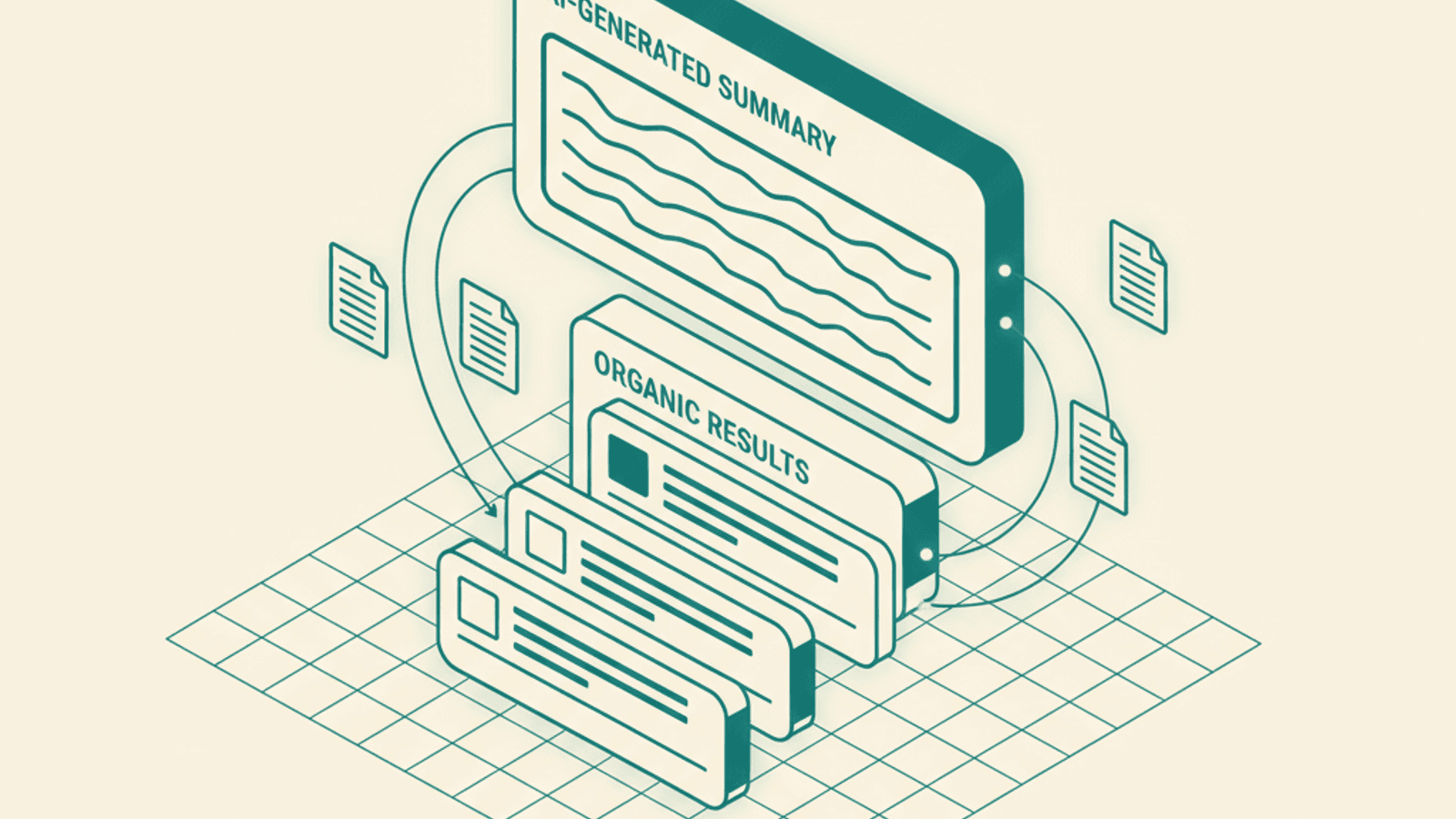
Google AI Overviews — the AI-generated summaries that appear at the top of many Google search results — have fundamentally changed what it means to rank number one. A page can sit in position three organically and still earn more visibility than the top result if Google cites it inside the AI Overview panel. Understanding how these summaries are generated, what content they favor, and how to measure your citation presence is now a core SEO competency.
What Are Google AI Overviews?
Google AI Overviews (formerly Search Generative Experience, or SGE) are AI-generated answer panels displayed at the top of Google SERPs for a wide range of queries. They synthesize information from multiple sources into a coherent summary and surface links to those sources alongside the generated text.
Introduced in limited testing in 2023 and rolled out broadly across U.S. English search in 2024, AI Overviews are now expanding to more languages and markets — including the Philippines, where English-language commercial and informational searches increasingly trigger Overview panels.
The panels appear most consistently for:
- Informational queries ("how does X work")
- Comparison queries ("X vs Y")
- Multi-step how-to queries
- Queries with medical, financial, or educational intent
They appear less often for purely navigational queries (branded searches for specific websites) and for highly transactional queries where Google still prioritizes shopping ads and organic results.
How AI Overviews Select Sources
Google has not published a complete technical specification for how AI Overviews pick their citations, but research and SEO community analysis point to several consistent signals.
Grounding in Google's Index
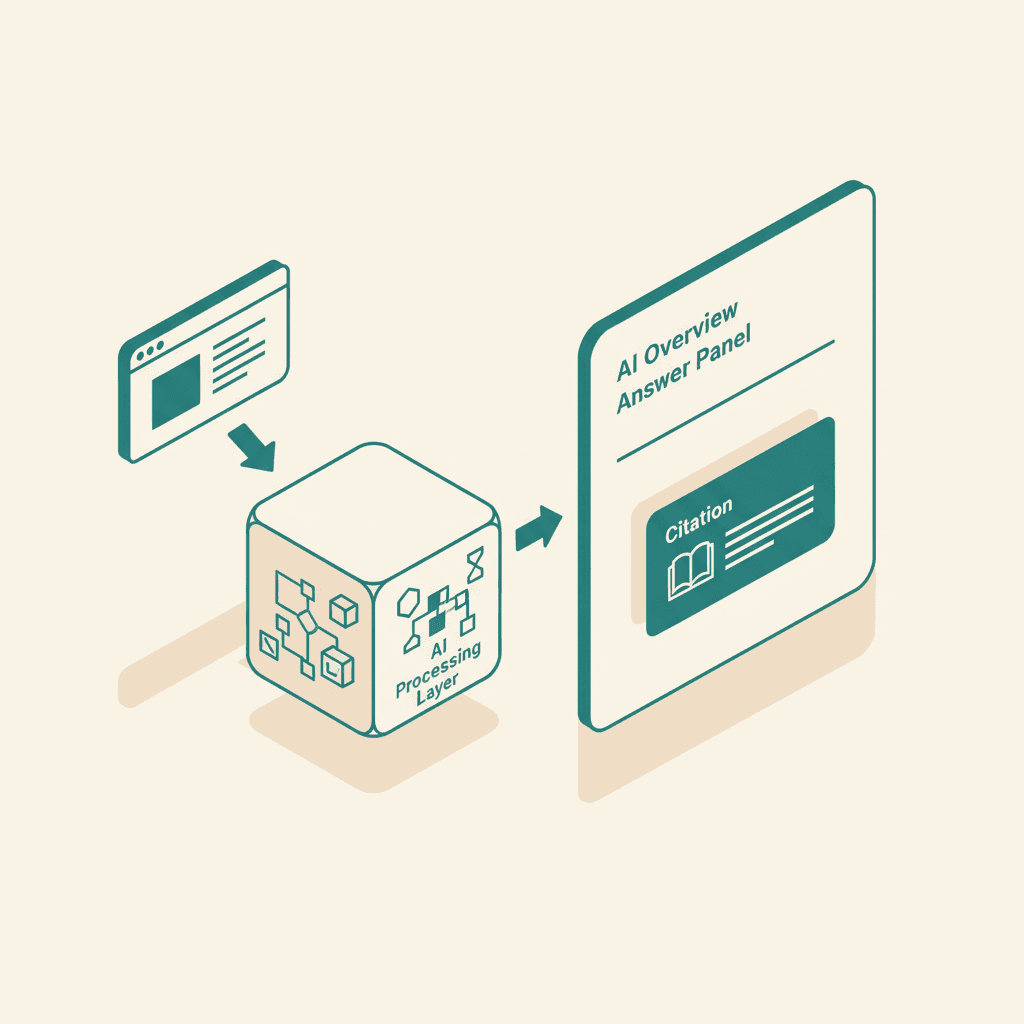
AI Overviews are not generated from a static training corpus alone. Google uses a retrieval-augmented generation (RAG) approach: the system first retrieves candidate documents from its live index, then passes those documents through a large language model to generate the summary. This means your page must be indexed and crawlable before it can be cited.
Quality and E-E-A-T Alignment
Pages cited in AI Overviews tend to demonstrate strong Experience, Expertise, Authoritativeness, and Trustworthiness signals. Google's quality rater guidelines apply directly to the sources the AI pulls from. Pages with author bios, clear publication dates, cited sources, and factual accuracy scores tend to appear more frequently.
For a deeper look at how AI is reshaping organic search more broadly, see how Google AI search is changing SEO.
Content Structure
The AI model favors content that is structured in ways that make facts easy to extract:
- Definitions stated clearly near the top of a section
- Numbered steps in how-to sections
- Comparison tables
- Short, declarative sentences that contain a complete fact
Dense prose without headings or formatting is harder for the model to parse reliably.
Topical Authority
Sites that cover a topic thoroughly across multiple pages — building what SEOs call topical authority — appear more often in AI Overviews on that topic. A site with twenty well-linked articles about local SEO is more likely to be cited for local SEO queries than a site with one article, even if that single article is high quality.
How AI Overviews Differ from Featured Snippets
Featured snippets pull a single excerpt from a single page. AI Overviews synthesize content from multiple sources, cite several pages simultaneously, and generate new text rather than quoting directly. This creates both an opportunity (any page can contribute to a summary even without ranking first) and a challenge (the AI may paraphrase your content without using your exact wording, making tracking harder).
The other critical difference is attribution transparency. Featured snippets show a clear source box. AI Overviews show citations as numbered links, sometimes collapsed, and the user must actively expand to see all sources. Early research suggests click-through rate from AI Overview citations is lower than from traditional position-one results — but citation presence still drives brand exposure and some traffic.
Whether AI Overviews ultimately replace traditional rankings or complement them is a debate the SEO industry is still working through. The argument that AI will replace SEO misses the point: the mechanics change, but the need to create credible, well-structured content grows stronger.
Optimization Strategies to Earn AI Overview Citations
1. Write Clear, Extractable Definitions
Every article that targets an informational query should open with a tight definition of the primary term. The AI model uses these definitions as raw material for its opening sentences. A definition like "Schema markup is structured data added to HTML that helps search engines understand the context of your content" is directly extractable. A vague introduction paragraph about how the topic is important is not.
2. Use Hierarchical Heading Structure
H2 and H3 headings that correspond directly to likely sub-queries help the AI identify which section of your content to pull from. If someone searches "how do Google AI Overviews work," a section headed "How Google AI Overviews Work" containing a clear explanation is more likely to be cited than a section headed "Understanding the Mechanics."
3. Answer the Question Completely — Then Expand
The AI favors sources that answer the query directly and completely. Burying the answer at the end of a long introduction is a structural mistake. Lead with the answer, then expand with depth. This matches how journalists are trained to write inverted-pyramid style, and it aligns with what the retrieval model is looking for.
4. Implement Structured Data
Schema markup signals to Google what type of content a page contains. Article schema identifies the page as editorial content. FAQ schema marks up question-and-answer pairs that the AI can pull for question-style queries. HowTo schema marks up step-by-step instructions. Pages with accurate schema have a cleaner machine-readable signal about their content structure.
5. Build Author Authority
AI Overviews heavily weight E-E-A-T. Publishing content under named authors with verifiable expertise — linking to their LinkedIn profiles, citing their credentials in author bios, and having them publish consistently on the topic — strengthens the trust signal for every page they contribute to.
6. Earn Links from Authoritative Sources
Backlink authority from credible domains remains a trust signal in AI Overview source selection. A page on an authoritative domain with strong referring domains is more likely to be treated as a reliable source than a well-written page on a new domain with no external links.
7. Keep Content Factually Current
The AI model pulls from live index documents. Outdated facts — old statistics, superseded product information, deprecated processes — reduce the reliability of a page as a citation source. Updating key statistics annually and marking content with a "last reviewed" date signals freshness.
Understanding how AI is being used for SEO more broadly shows why content quality is now the most durable competitive advantage.
Tracking AI Overview Citations
Standard rank tracking tools do not capture AI Overview citation presence. Specialized tools are needed:
DataForSEO AI Overview tracking: DataForSEO's SERP API now flags AI Overview presence and lists cited URLs for individual queries. This allows programmatic monitoring of citation status across a keyword list.
Ahrefs Brand Radar: Ahrefs introduced AI mention tracking that monitors brand and domain citation presence across multiple AI platforms, including Google AI Overviews, ChatGPT, and Perplexity.
Manual SERP sampling: Pulling targeted SERPs directly and recording citation status is time-intensive but gives ground-truth data on competitive citation rates.
Google Search Console: GSC does not yet disaggregate clicks from AI Overview citations vs. organic results, but monitoring impression share for pages you know are being cited vs. not cited can reveal relative traffic differences.
For businesses in the Philippines operating across English and Filipino language search, it is worth tracking AI Overview presence separately for each language variant, as citation rates and panel formats differ.
The Impact on Click-Through Rate and Organic Traffic
The SEO community's early data on AI Overview impact is mixed. Some sites have reported traffic declines for informational queries where AI Overviews now fully answer the question without requiring a click. Others have reported that citation presence drives branded search volume as users who see a business name in a summary later search for that brand directly.
The consensus emerging in 2026 is that AI Overviews are accelerating a shift that was already underway: informational content needs to do more than rank. It needs to establish authority and brand recognition even in zero-click scenarios. The value of a content strategy is increasingly measured in brand recall as much as in direct traffic.
Sites pursuing a full AI SEO service approach are building topical coverage maps that optimize simultaneously for traditional ranking, AI Overview citation, and direct brand visibility. The SEO fundamentals that support all of these objectives — quality content, strong technical foundations, and authoritative links — remain the bedrock.
Technical SEO Foundations That Support Citation
The ability to be cited in AI Overviews depends partly on technical SEO fundamentals:
- Crawlability: Pages must be crawlable and indexable. Noindex tags and crawl blocks prevent citation.
- Page speed: Slow pages are harder to crawl frequently, which affects index freshness.
- Mobile optimization: AI Overviews are displayed heavily on mobile. Technical SEO for mobile experiences matters.
- Canonical tags: Duplicate content confusion caused by incorrect canonicals can dilute authority across versions of a page.
A strong technical SEO foundation is a prerequisite for any AI Overview optimization effort. The technical layer must be clean before content-level optimizations yield their full effect.
Generative Engine Optimization: The Broader Context
AI Overviews are one surface in a growing landscape of AI-powered search and discovery. The emerging discipline of generative engine optimization — sometimes abbreviated GEO — addresses how to build content and entity authority that earns citations across all major AI platforms, not just Google. Optimizing for AI Overviews is the most established use case within GEO because Google remains the dominant search platform globally, but the principles transfer to ChatGPT, Perplexity, Copilot, and other platforms.
Monitoring Competitors' Citation Presence
Understanding which competitors are regularly cited in AI Overviews for your target queries is as important as monitoring their organic rankings. A competitor who barely ranks organically but appears in every AI Overview for your category is capturing substantial visibility. This competitor analysis should be built into regular SEO reporting.
The AI SEO service landscape in 2026 increasingly includes AI citation monitoring as a standard deliverable, alongside traditional keyword rank tracking.
Frequently Asked Questions
What is a Google AI Overview?+
A Google AI Overview is an AI-generated summary panel that appears at the top of Google search results for many queries. It synthesizes content from multiple web sources and displays links to those sources as citations within the generated text.
How does Google decide which pages to cite in AI Overviews?+
Google uses a retrieval-augmented generation process: it retrieves candidate pages from its live index, then uses a large language model to generate the summary. Pages with strong E-E-A-T signals, clear content structure, schema markup, and authoritative backlinks are cited more frequently.
Does being cited in an AI Overview drive meaningful traffic?+
Click-through rates from AI Overview citations are generally lower than from traditional first-position organic results, because the AI panel often partially answers the query. However, citation presence builds brand exposure, and cited brands frequently see increases in direct branded search volume.
How do I check whether my pages are being cited in AI Overviews?+
Standard rank tracking tools do not capture AI Overview citations. Dedicated tools like DataForSEO's SERP API, Ahrefs Brand Radar, or manual SERP sampling are needed to track citation presence across a keyword list.
Does AI Overview optimization apply to Philippine businesses?+
Yes. AI Overviews are appearing for English-language searches in the Philippines and are expected to expand further through 2026. Philippine businesses that publish well-structured, authoritative English-language content are eligible to be cited. GBP schema and local business structured data also help local citations appear.